

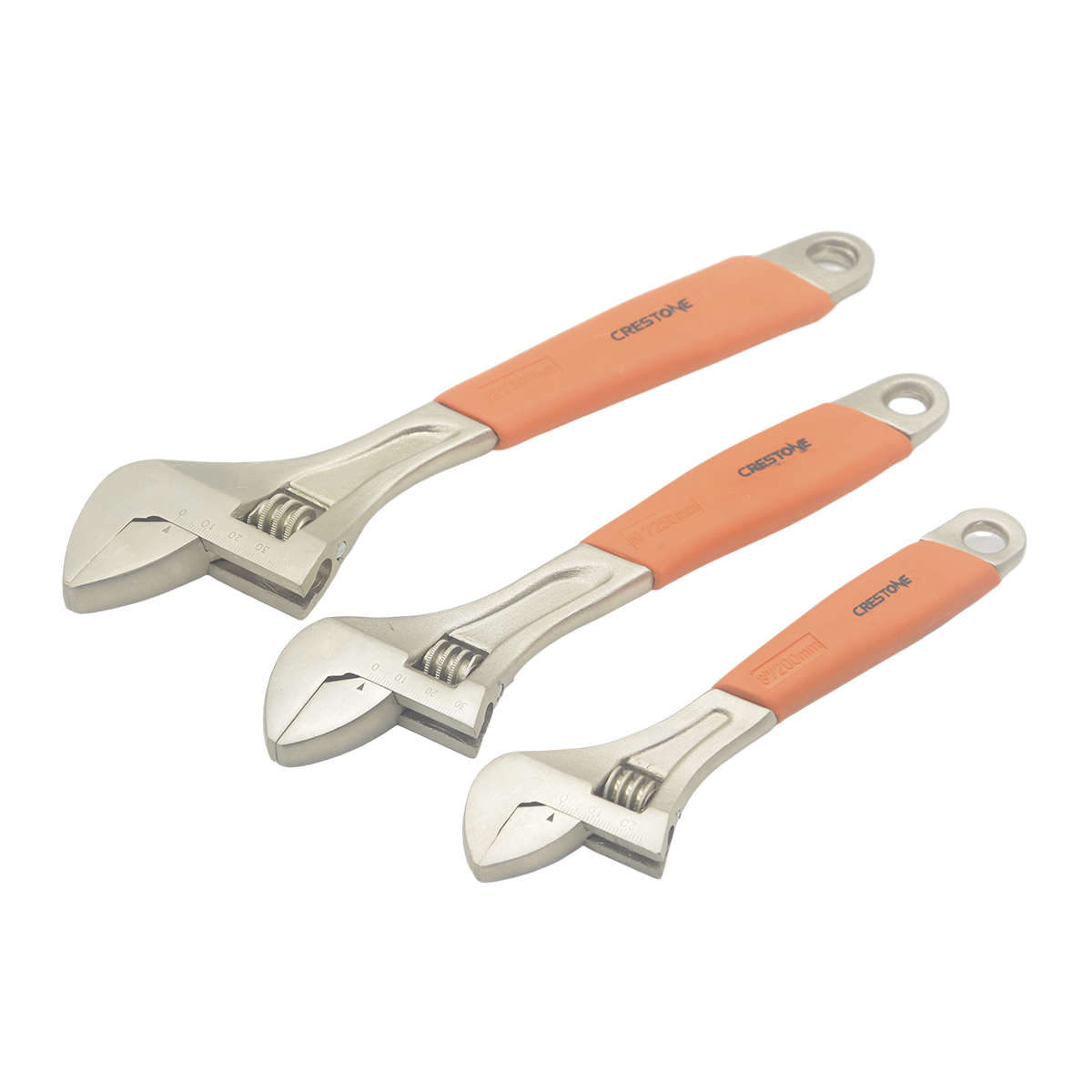
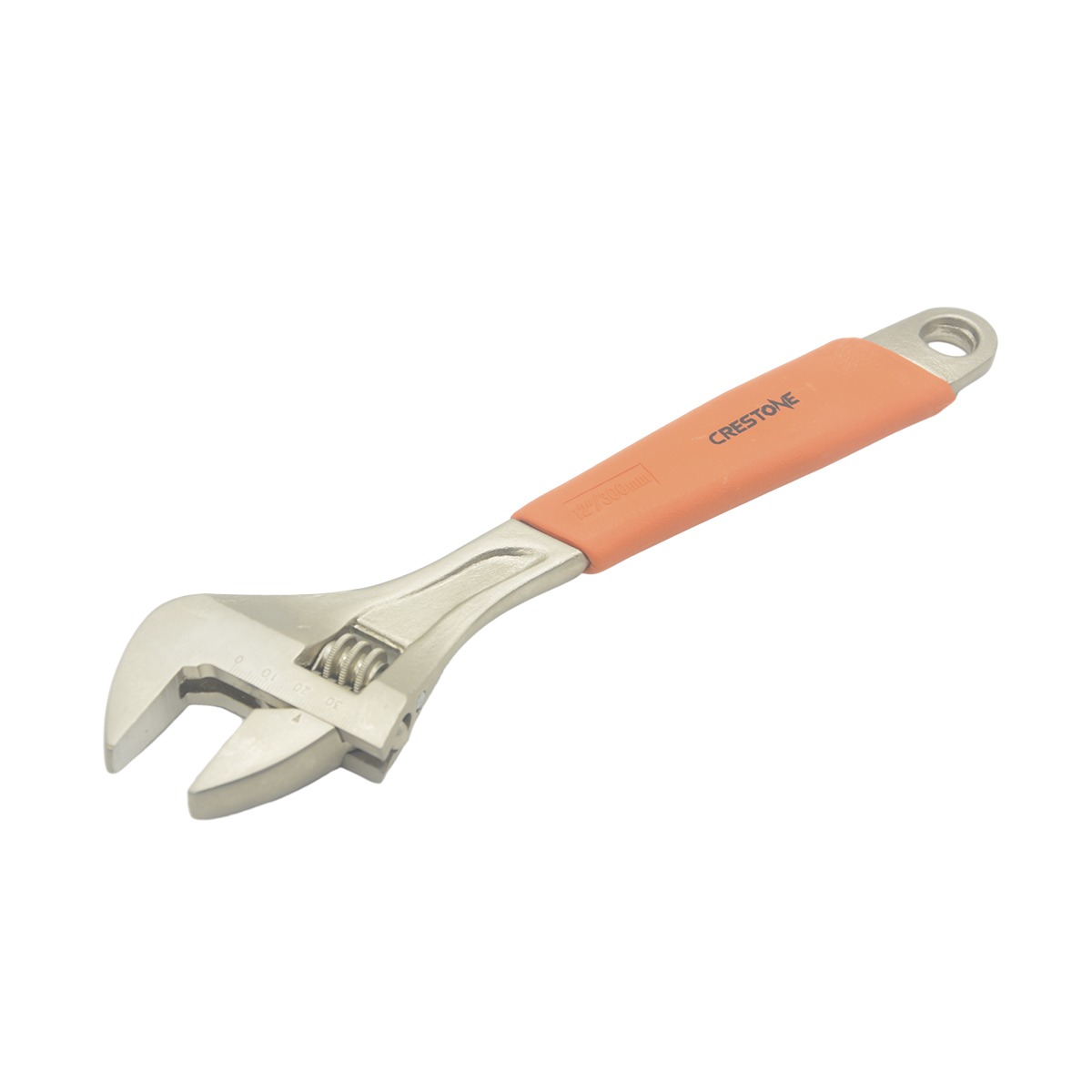
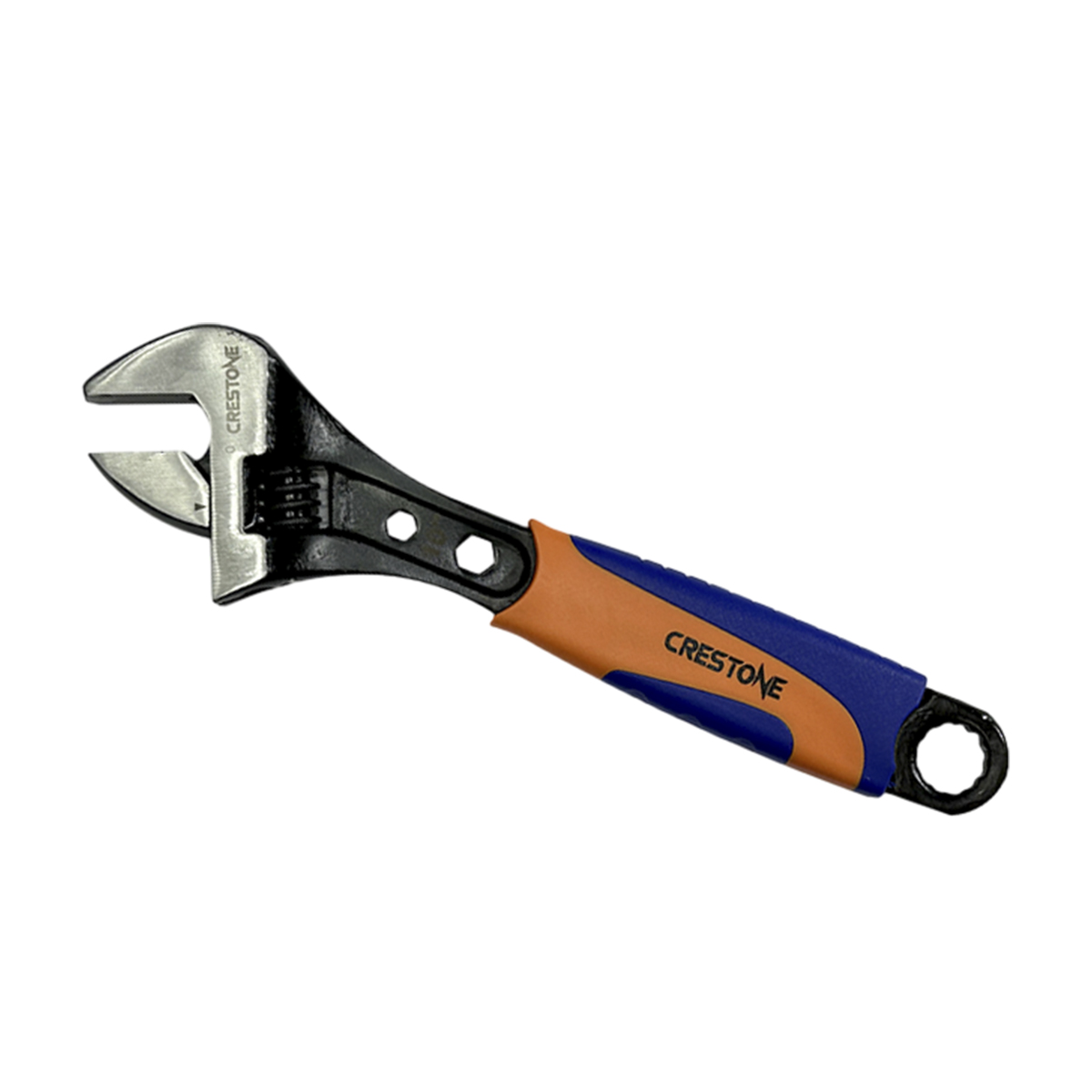
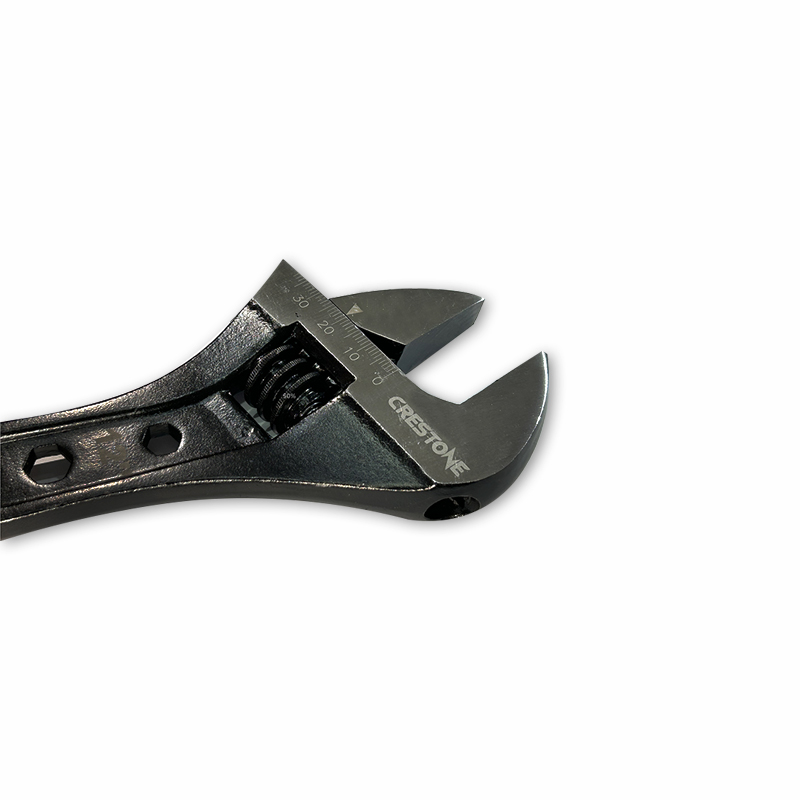
adjustable wrenches
| MOQ | 200 – 500 Pieces | 501 – 999 Pieces | > = 1000 Pieces |
| Discount | 95% | 90% | 80% |
still deciding? get samples first! order sample
- Chrome vanadium steel drop forging
- Precision machining and broaching
- Professional weight and balance
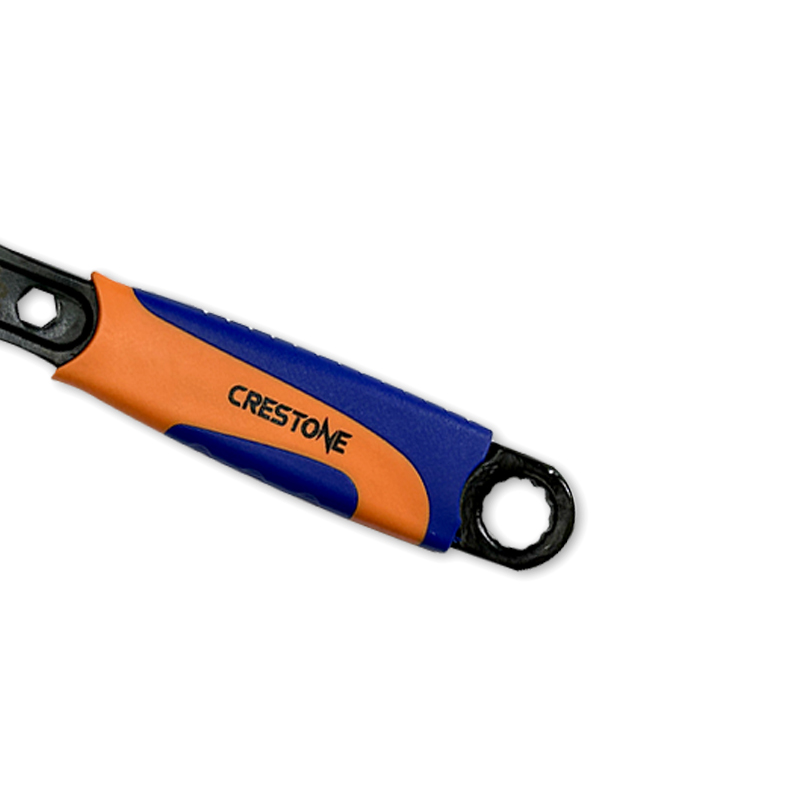
- Plastic soft shell, anti-skid, anti-drop
adjustable wrench manufacturer and supplier
CRESTONE adjustable wrenches are trusted for their robust construction, long-lasting durability, and reliable performance. Designed to meet various applications, these wrenches are available in different specifications to suit the needs of professionals and everyday users alike.
As a professional OEM manufacturer and supplier in China, we provide adjustable wrenches at affordable wholesale prices, with bulk order options available. Whether you’re looking for high-quality tools for industrial use or retail distribution, we offer tailored solutions backed by expert support. For inquiries or assistance in selecting the right wrench, feel free to contact us by phone or email.

specification
| adjustable wrench | CS-AWC092001 | CS-AWC092001 | CS-AWC092001 | CS-AWC092001 |
| Size | 6″ | 8″ | 10″ | 12″ |
| Inner box | 6PCS | 6PCS | 6PCS | 6PCS |
| Carton | 120PCS | 120PCS | 120PCS | 120PCS |


types of adjustable wrenches
Adjustable wrenches come in different designs, each suited for specific jobs. While they all share the same movable jaw concept, their shapes and features make them ideal for certain applications. Here are the most common types:
Standard adjustable wrench (crescent wrench)
The most popular type, often called a crescent wrench, has smooth jaws and a thumbwheel to open or close the jaw. It’s versatile and works well for general tasks like tightening bolts on furniture, bicycles, or appliances. Available in sizes from 4 to 12 inches for everyday use (and up to 4 feet for industrial work), this all-around tool is a staple in nearly every toolkit.
Pipe wrench
Built for heavy-duty use, the pipe wrench has serrated jaws that bite into round surfaces, making it ideal for gripping and turning metal pipes. Its angled teeth and long handle provide strong leverage, especially on slippery or rusted pipes. Sizes range from small (8 inches, good for ¼–¾ inch pipes) to massive industrial models (48 inches, handling up to 5-inch pipes).
Monkey wrench
An older design, the monkey wrench has smooth jaws like a crescent wrench but is bulkier and longer. Though less common today, it’s still used for heavy-duty mechanical work where extra strength is needed, and it remains popular among collectors and enthusiasts.
Plumber’s wrench (adjustable spanner wrench)
Designed for plumbing applications, this wrench features toothed, adjustable jaws that grip pipes and fittings tightly. Some versions use a spring-loaded mechanism to maintain pressure. Certain spanner-style versions include a pin that fits into side slots of lock nuts, collars, or bearings—making them essential for specialized plumbing and mechanical work.
purchasing guide for adjustable wrench
Whether you’re a professional mechanic, a plumber, or a weekend DIY enthusiast, the adjustable wrench is a tool you can always rely on. Its simple yet versatile design makes it ideal for countless tasks—from assembling furniture and fixing bicycles to tackling heavy-duty industrial repairs. With its unique ability to adjust to different fastener sizes, it offers both flexibility and strength in one compact tool.
In this article, CRESTONE explores how adjustable wrenches work, the different types available, and their most common applications. You’ll also find practical tips on choosing the right wrench for your needs and maintaining it for long-lasting performance. Whether you’re just starting out with tools or upgrading your gear, this guide will help you get the most from this essential hand tool.

What is an adjustable wrench?
The adjustable wrench (also called an adjustable spanner, pipe wrench, or crescent wrench) has been a game-changer in the world of hand tools since its invention in the late 19th century. Patented in 1891 by Swedish inventor Johan Petter Johansson, it solved a common problem—how to grip nuts and bolts of different sizes without needing a separate wrench for each one.
Johansson’s design introduced a movable jaw, allowing one tool to replace many. Unlike fixed wrenches that fit only one size, its movable jaw can be widened or narrowed to match the nut or bolt you’re working on. This makes it convenient and versatile, reducing the need to carry an entire set of wrenches.
With its screw mechanism, the jaws open or close smoothly. To use the wrench, place the jaws around the nut or bolt, then turn the adjusting screw until the sliding jaw grips it securely. With the fastener held firmly between the fixed and movable jaws, apply pressure on the handle to tighten or loosen it with ease.
Main parts of an adjustable wrench
- Fixed jaw – the solid, non-moving side of the head that holds one side of the fastener.
- Sliding jaw (movable jaw) – moves in and out to adjust the wrench’s opening, allowing it to fit different sizes.
- Adjusting screw (thumbwheel) – a small wheel beneath the head that moves the sliding jaw with precision.
- Handle – provides grip and leverage for turning the fastener.
Advantages and limitations of adjustable wrenches
No matter how complete your wrench set is, there will always be times when a fastener doesn’t match any of your tools. That’s when an adjustable wrench proves its worth. Often called the “wild card” of hand tools, it adapts to fit different sizes, offering versatility and convenience. Like any tool, however, it comes with both strengths and weaknesses.
Advantages of adjustable wrenches
- Versatility: The biggest strength of an adjustable wrench is its ability to handle multiple fastener sizes. Instead of needing separate wrenches for metric and standard sizes, a single adjustable wrench can cover both. This saves time, reduces tool-switching, and ensures you’re always prepared when the exact size isn’t available.
- Convenience: One adjustable wrench can replace an entire set of fixed-size wrenches. This not only saves space in your toolbox but also keeps your work area more organized. When you need a different size mid-task, you simply adjust the jaw and keep working—no searching for another tool.
- Great for quick repairs: Adjustable wrenches are ideal for fast, on-the-spot fixes and situations where carrying a full set of tools isn’t practical. Whether in plumbing, automotive repair, or household maintenance, their wide range of use makes them a reliable go-to.
- Cost-effective: Instead of buying multiple wrenches, one adjustable wrench can cover a broad range of needs. This makes it budget-friendly for both diy users and businesses.
Limitations of adjustable wrenches
- Less grip strength: Compared to fixed-size wrenches, adjustable wrenches may not grip as tightly. If not properly fitted, they can slip and damage fasteners.
- Jaw looseness: With frequent use—especially in cheaper models—the adjusting mechanism can wear out, causing the jaws to loosen and making the tool less reliable.
- Not for high-torque jobs: For tasks that demand strong, precise tightening—such as engine work or heavy industrial machinery—a fixed-size wrench offers better strength and accuracy.
Best use cases
Adjustable wrenches are best suited for:
- Home repairs and general maintenance
- Plumbing tasks
- Emergency toolkits
- Jobs where portability matters
They’re perfect for diyers who need a single reliable tool for multiple projects, as well as professionals who want a backup or quick-adjust option. However, when precision and maximum torque are required, fixed-size wrenches remain the better choice.

How to choose the right adjustable wrench?
With so many options available, choosing the right adjustable wrench can feel overwhelming—but it doesn’t have to be. The right tool depends on size, quality, and features that match your needs. Whether you’re a professional or a DIY enthusiast, here are the key factors to consider:
Choose the right length
Adjustable wrench length refers to the entire tool. The most common sizes are 12 inches, 10 inches, or 8 inches, but smaller ones are up to 4 inches and 2 feet long. Generally speaking, you can apply greater torque (turning force) with a longer wrench, but fitting the tool into a tight spot is more challenging.
- 4–6 inches: best for small jobs and tight spaces (electronics, appliances).
- 8–10 inches: the most versatile sizes for everyday repairs like plumbing, bikes, and household tasks.
- 12–18 inches: provide extra leverage for heavy-duty work such as automotive or industrial repairs.
if you’re unsure, a 10-inch wrench is the perfect all-around choice.
Check material and build quality
A good adjustable wrench should feel sturdy and operate smoothly. Look for:
- Material: chrome vanadium or forged carbon steel for durability.
- Finish: chrome plating or black oxide to resist rust.
- Jaw action: smooth movement with no wobble.
- Adjusting screw: easy to turn but firm enough to stay locked.
Investing in quality ensures your wrench lasts longer and performs reliably.
Pick the right type and features
Different jobs call for different wrench styles:
- Crescent wrench: best for general repairs.
- Pipe or plumber’s wrench: ideal for plumbing and gripping round objects.
- Basin wrench: perfect for hard-to-reach fittings under sinks.
- Special features can also add value: slim heads for tight spaces, wide-opening jaws for larger fasteners, reversible jaws for flat and round surfaces, and rubber-coated handles for comfort.
Balance budget and value
Adjustable wrenches range from affordable entry-level models to professional-grade tools. While it’s tempting to go for the cheapest option, remember that low-quality tools can wear out quickly or damage fasteners.
- Occasional users: a mid-range wrench is usually sufficient.
- Frequent or professional users: high-quality tools are worth the investment—they last longer and prevent damage to fasteners.
jaw capacity
If you’re working with larger nuts and bolts, you’ll need a wrench with enough jaw room to fit around the fastener. As a rule of thumb, an 8-inch wrench typically has a 1 1/8-inch opening, a 10-inch wrench opens to about 1 1/4 inches, and a 12-inch wrench has around a 1 1/2-inch capacity. Some modern models even feature extra-wide jaws on shorter wrenches, giving you more flexibility without adding length.
jaw thickness
Standard jaws can sometimes be too bulky for tight spaces or delicate equipment. Thin-jaw adjustable wrenches are designed to reach smaller fasteners, such as those on bicycles or fine machinery, without sacrificing overall capacity. These tools often share the same length and maximum opening as regular wrenches but are slimmer at the jaws for better access.
adjustment knob (knurl)
The adjustment knob controls the sliding jaw, and its quality directly affects performance. A good knob should turn easily yet hold firmly without wobbling. Higher-quality wrenches often feature four threads on the knob compared to three on lower-end tools, offering smoother adjustment and better stability.
handle
Handles should be comfortable and safe to grip. Exposed metal handles are durable, but a contoured or rubber-coated handle can reduce strain, prevent slipping, and feel more comfortable when your hands are wet or sweaty.
scale of measurement
Many adjustable wrenches include measurement scales etched on the head, letting you quickly size fasteners. Most models provide both metric and sae (society of automotive engineers) markings, though some only feature one system. If precision or dual-scale markings matter to your work, check this detail before purchasing.
Conclusion
Adjustable wrenches are versatile, essential tools for every toolbox. Their adjustable jaws fit a wide range of fastener sizes, making them perfect for quick fixes, home projects, or more complex tasks. From the standard Crescent-style to specialized types like pipe and basin wrenches, there’s a model for every job. With proper use and maintenance, adjustable wrenches provide reliable grip, smooth operation, and long-lasting performance.
As a professional wrench manufacturer in China, CRESTONE take pride in producing durable, high-quality tools for both professionals and DIY users. Whether tightening a bolt, assembling furniture, or tackling a plumbing repair, our adjustable wrenches are built to get the job done efficiently.
Explore our range of adjustable wrenches today and equip your toolkit with a reliable tool you can count on—project after project.
people also ask about adjustable wrenches
How to use an adjustable wrench?
Using an adjustable wrench correctly improves efficiency, protects your fasteners, and keeps you safe. Follow these steps for best results:
#1. Choose the right size: Select a wrench that suits the fastener. Smaller bolts require smaller wrenches for control, while larger bolts benefit from a longer handle for leverage. Avoid using a wrench that is too big for the job—it can feel awkward and less secure.
#2. Adjust for a snug fit: Turn the adjustment screw to fit the sliding jaw tightly around the fastener. Ensure the fit is snug to prevent slipping or rounding off corners. Position the fixed jaw on the side where force is applied for better grip and pressure distribution.
#3. Pull, don’t push: Pull the wrench toward you instead of pushing. This gives more control and reduces the risk of injury if the wrench slips. If pushing is necessary, use the palm of your hand rather than leaning your body weight into it.
#4. Use proper technique: Keep jaws flat against the fastener. Avoid overtightening to prevent damage or stripped threads. For delicate surfaces or chrome-plated bolts, wrap a cloth around the fastener or use smooth jaws to prevent scratches.
How to maintain your adjustable wrench?
Proper maintenance keeps your adjustable wrench working smoothly and extends its lifespan.
Keep it clean
After each use, wipe your wrench to remove dirt, grease, and metal shavings, especially around the jaws and adjusting screw. Cleaning tips:
- Use a dry or slightly damp cloth for light dirt.
- For stubborn grime or surface rust, scrub gently with a wire brush or old toothbrush.
- Mild degreaser or soapy water can remove tougher grease—dry completely afterward.
- Avoid using excessive water and never clean a wrench in a dishwasher. Proper cleaning prevents buildup that can interfere with jaw movement or screw operation.
Lubricate moving parts
Lubrication keeps the jaws sliding smoothly and prevents the adjusting screw from stiffening. How to lubricate?
- Apply a few drops of light machine oil or wd-40 to the screw and sliding jaw.
- Turn the screw several times to distribute the oil evenly.
- Wipe off any excess oil to avoid attracting dirt.
- Lubricate every few weeks or whenever the wrench feels stiff or gritty.
How and where to store your adjustable wrench?
Proper storage helps prevent rust, corrosion, and damage, keeping your wrench in top condition. Follow these tips for safe and effective storage:
- Keep it dry: moisture causes rust and corrosion, so avoid wet or damp environments.
- Use protective storage: store your wrench in a toolbox, drawer, or tool pouch to shield it from dust, impact, and scratches.
- Avoid unsafe locations: don’t leave tools in garages, basements, or outdoors where humidity or temperature changes can harm them.
- Long-term storage: apply a thin layer of light oil to the metal parts as a protective coating if the wrench will sit unused for months.
How to prevent rust on adjustable wrenches?
Rust can reduce the lifespan of your wrench and make it harder to use. Regular cleaning, drying, and lubrication help prevent corrosion. Follow these steps:
- Clean and dry: after each use, remove dirt, grease, and debris. Wipe the wrench thoroughly and ensure it is completely dry before storage.
- Inspect for damage: check for cracks, burrs, or rough edges. If needed, smooth rough edges with a file or grinder.
- Lubricate: apply a light coating of all-purpose or machine oil to the jaws, screw, and moving parts. This protects the metal from moisture and prevents rust formation.
- Treat light rust: if you notice minor rust spots, apply white vinegar or a rust remover, let it sit briefly, then scrub gently with steel wool or a wire brush.
- Severe rust: for heavy rust that affects functionality, cleaning may not suffice—consider replacing the wrench to ensure safety and performance.
Why is my adjustable wrench stuck or hard to adjust?
If your wrench is difficult to adjust, it may be due to dirt, rust, or lack of lubrication. Clean the tool thoroughly and apply oil or lubricant to the screw and sliding jaw. If it remains stiff, it may be time to replace the wrench.
Can you use an adjustable wrench for any size nut or bolt?
Adjustable wrenches are versatile but have limits. Each wrench has a maximum jaw capacity—always use a wrench appropriate for the fastener to avoid damaging the tool or the hardware.
Can you use an adjustable wrench instead of a pipe wrench?
No. While both have adjustable jaws, they serve different purposes. Adjustable wrenches are for nuts and bolts, whereas pipe wrenches grip and turn pipes. Using the wrong tool can damage both the wrench and the workpiece.
What is the difference between a crescent wrench and an adjustable wrench?
The first adjustable wrench was produced by the Crescent Tool Company in the early 1900s, so the terms “crescent wrench” and “adjustable wrench” are often used interchangeably. In the UK, it may also be called a “spanner.”