

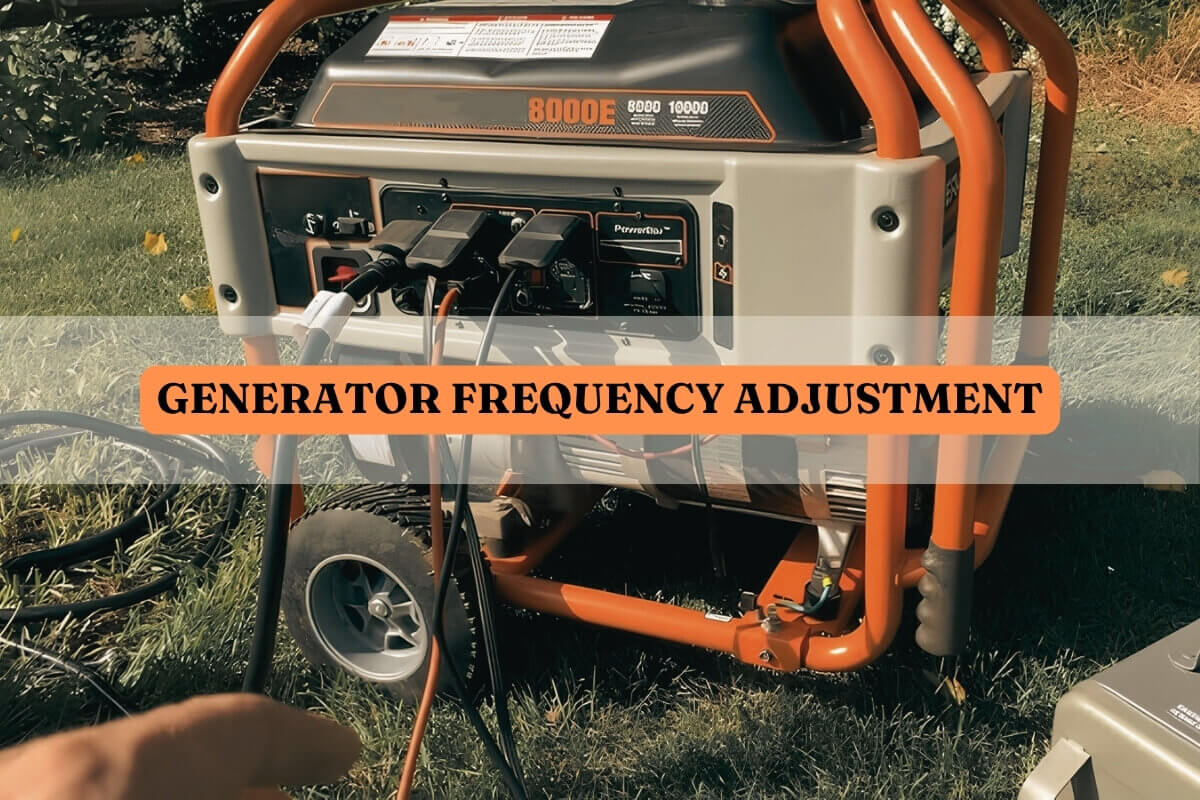
Generator frequency adjustment
Your UPS rejected the generator because its electrical output is out of specification. Sensitive electronics and motors cannot tolerate frequency drift, making backup power a liability instead of a safety measure. Maintaining a stable and accurate generator frequency is essential for reliable operation.
Unstable frequency is a critical failure that cannot be resolved by simply resetting a breaker. Frequency fluctuations can damage electrical equipment, reduce efficiency, and cause operational problems in industrial, commercial, and domestic applications.
Understanding how to adjust a generator’s frequency helps ensure that the equipment operates at the correct frequency, this not only supports the smooth functioning of electrical systems but also prevent equipment failure, and reduces maintenance costs over time.
Understanding generator frequency
Definition of generator frequency
Generator frequency is a key aspect of power generation that determines how effectively a generator powers connected equipment. Measured in Hertz (Hz), it refers to the number of alternating current (AC) cycles produced per second. The standard frequency is 50 Hz in most of Europe, Asia, Africa, Australia, and much of South America, while 60 Hz is used in North America, parts of Central America, and some Caribbean countries.
For example, a motor rated for 50 Hz operating at 60 Hz will run approximately 20% faster than its rated speed. Low frequency can make motors run slower and less efficiently, while high frequency can cause them to run too fast, leading to overheating and increased wear.
Importance of stable frequency
A stable generator frequency is essential for the following reasons:
- Equipment protection: Electrical equipment is designed to operate at a specific frequency. Frequency fluctuations can damage motors, transformers, power supplies, and sensitive electronics. Maintaining the correct frequency also helps protect both the generator and connected equipment, extends equipment life, and reduces maintenance costs.
- Operational efficiency: Incorrect frequency reduces the efficiency of equipment such as pumps, compressors, and HVAC systems. It can also increase fuel consumption by causing the engine to run outside its optimal speed. Stable frequency helps maintain efficient operation and lowers operating costs.
- Safety and overload prevention: Frequency instability can cause overheating, electrical hazards, and equipment overload.
- Compatibility: Grid-connected generators must match the mains supply frequency to prevent interruptions or equipment failure. Operating outside the frequency tolerance specified by the equipment manufacturer may also void equipment warranties.
Factors affecting generator frequency
Generator frequency is not fixed and can vary due to internal and external factors.
Engine speed
Engine speed (RPM) is the primary factor that determines generator frequency. A synchronous generator produces AC output through electromagnetic induction as a rotating magnetic field passes through the stator windings. As engine speed increases, the output frequency increases, while a decrease in engine speed lowers the frequency.
Relationship between engine RPM and frequency:
Frequency (Hz) = (RPM × Number of Pole Pairs) ÷ 60
For example, a 4-pole generator produces 50 Hz at 1,500 RPM and 60 Hz at 1,800 RPM, while a 2-pole generator produces 50 Hz at 3,000 RPM and 60 Hz at 3,600 RPM. Since the pole count is fixed during manufacturing, RPM is the only adjustable factor in a conventional generator. Maintaining the correct RPM through proper throttle and governor adjustment is essential.
Load variations
Changes in the connected load directly affect generator frequency.
- Sudden load increase: When heavy or multiple loads are switched on at the same time, the engine may slow down temporarily, causing the frequency to drop.
- Load decrease: When equipment is switched off, the engine speed may increase, causing the frequency to rise.
A properly calibrated governor or automatic load-sensitive frequency control helps compensate for these load changes.
Mechanical condition of the generator
The generator’s mechanical condition plays an important role in maintaining stable frequency.
Common issues such as worn engine parts, damaged alternators, misaligned rotors, or loose components can reduce generator performance and cause irregular rotation, resulting in frequency fluctuations.
Fuel quality and supply
Fuel quality and supply directly affect engine performance and frequency stability.
Low-quality or inconsistent fuel can cause incomplete combustion, engine misfires, uneven power delivery, and engine speed fluctuations. An unstable fuel supply can also cause the engine to slow down or surge, affecting the output frequency.
Using clean, high-quality fuel and maintaining a consistent fuel supply helps keep the frequency stable.
Environmental conditions
Environmental conditions can influence engine performance and indirectly affect generator frequency.
- High temperature can reduce engine efficiency, slightly lowering RPM and frequency.
- High altitude reduces oxygen levels, affecting combustion and causing engine speed instability.
- Humidity and dust can affect airflow and engine efficiency, resulting in minor frequency variations.
Type of electrical load
The type of connected load also affects frequency stability.
- Resistive loads, such as heaters and incandescent lights, have little effect on frequency.
- Inductive loads, including motors, compressors, and pumps, draw more current when frequency drops, causing greater frequency deviations.
- Capacitive loads may cause minor frequency oscillations if the system is not properly regulated.
Generator age and maintenance history
Older generators or poorly maintained units are more likely to experience frequency fluctuations.
Regular preventive maintenance, including lubrication, cleaning, and inspection of key components, helps maintain stable generator frequency.
Types of generator frequency control
Maintaining a stable generator frequency is essential for safe and efficient operation. Different frequency control systems help keep the generator operating at the correct frequency under various conditions.
Manual control
Manual control is the simplest method of frequency regulation. The operator adjusts the engine speed using a throttle or speed lever while monitoring the frequency with a meter until the desired frequency is reached.
Advantages
- Simple and cost-effective.
- Suitable for small, portable, or older generators.
Disadvantages
- Requires continuous monitoring and operator experience.
- Frequency can fluctuate during sudden load changes.
Example: A portable camping generator uses a manual speed lever to maintain 50 Hz or 60 Hz, depending on local standards.
Automatic control
Automatic frequency control uses an electronic governor or control unit to maintain a constant frequency without operator intervention.
The system monitors changes in frequency caused by load variations or engine speed changes and automatically adjusts the fuel supply or throttle to maintain the correct RPM and keep the frequency within the rated tolerance.
Advantages
- Maintains stable frequency under changing loads.
- Reduces human error.
- Suitable for industrial, commercial, and residential backup generators.
Disadvantages
- More expensive than manual control.
- Requires proper setup and calibration.
Example: A hospital backup generator uses an electronic governor to maintain 60 Hz even when multiple devices operate simultaneously.

Steps to adjusting the generator frequency
Adjusting generator frequency requires a systematic approach to ensure safe operation and stable performance.
Step 1. Check the current frequency
Use a reliable frequency meter or multimeter to measure the generator’s output under both no-load and loaded conditions. Run the generator without a load for 5–10 minutes until it reaches operating temperature, then connect the meter to the 120 V or 240 V outlet and record the no-load frequency. Set the no-load frequency 1–2 Hz above the rated frequency, following the engine service manual, to compensate for the natural frequency drop under load.
Locate the governor mechanism
- Mechanical governor: Locate the adjustment screw, usually found on the engine block, carburetor throttle arm, or governor shaft bracket.
- Electronic governor: Locate the controller box, typically labeled “Governor Controller” or “AVR/Governor Unit,” where the adjustment is made using a potentiometer.
Step 2. Inspect mechanical components
Inspect bearings, the engine speed regulator, and the alternator for wear, damage, or misalignment.
Step 3. Adjust engine speed
Since frequency is directly proportional to engine speed, adjust the throttle to increase or decrease the RPM until the desired frequency is reached. Make small adjustments to avoid overcorrecting.
Step 4. Use the governor for fine-tuning
The governor automatically controls engine speed during load changes. Adjust the governor to minimize frequency deviations under varying loads.
Mechanical governor
Loosen the locking nut slightly without removing it. Turn the adjustment screw clockwise to increase RPM and frequency or counterclockwise to decrease them. Make adjustments in quarter-turn increments, tighten the locking nut after each adjustment, and wait 15–20 seconds for the engine to stabilize.
Electronic governor
With the generator running at no load and all output terminals disconnected, locate the “SPEED” or “HZ” potentiometer inside the controller box. Use a precision flathead screwdriver and make small adjustments until the desired frequency is reached.
Adjust governor sensitivity
If the engine hunts or surges, adjust the governor sensitivity.
- For mechanical governors, increase the stability spring tension in quarter-turn increments until surging is reduced.
- For electronic governors, adjust the potentiometer labeled “STABILITY,” “GAIN,” or “DROOP” in small increments until the frequency remains stable.
If hunting continues, inspect the fuel system for blocked jets or sticking valves.
Step 5. Recheck the frequency under load
Operate the generator under normal load conditions and verify that the frequency remains within the target range.
Use resistive loads, such as space heaters or incandescent lights, and gradually increase the load to 50%–75% of the generator’s rated running wattage. Avoid using inductive loads, such as motors, during testing because their startup surge can affect frequency readings.
For a 60 Hz system, the frequency should stabilize at 60.0 Hz. For a 50 Hz system, it should stabilize at 50.0 Hz.
- If the loaded frequency drops by more than 0.5 Hz, increase the no-load frequency slightly, then retest.
- If the loaded frequency remains more than 0.5 Hz above the target, lower the no-load frequency and repeat the test.
Step 6. Document the settings
Record the final frequency, engine speed, and governor settings. Keeping these records provides a reference for future maintenance, troubleshooting, and future frequency adjustments.
Safety in Generator frequency adjustment
Adjusting generator frequency requires proper safety procedures to protect both the operator and the equipment.
Overload protection: Many generators have built-in overload protection that automatically shuts down the unit if the frequency deviates beyond the allowable range. This helps protect the generator and connected equipment from damage.
Monitoring devices: Frequency meters, voltmeters, and alarms allow operators to monitor generator performance in real time. Continuous monitoring helps detect abnormal frequency fluctuations before they lead to equipment problems.
Proper shutdown procedure: Before making any adjustments, operate the generator at a reduced load or shut it down if required. Follow the manufacturer’s instructions to avoid electrical hazards and mechanical stress.
For permanently installed generators, follow lockout/tagout (LOTO) procedures to isolate the generator from the transfer switch. Verify zero voltage with a meter and apply the lockout device to prevent backfeed.
Personal safety precautions:
- Always wear insulated gloves, safety shoes, and ANSI-rated safety glasses when adjusting generator frequency to reduce the risk of electrical shock and injury.
- Operate the generator outdoors and away from doors, windows, and other openings to prevent carbon monoxide exposure.
- Before touching any electrical terminals, disconnect all connected loads and unplug all equipment. Treat every terminal as energized, and keep hands away from rotating components such as the cooling fan during testing.
Common mistakes to avoid
Avoiding these common errors helps maintain stable operation and protect connected equipment.
Ignoring load variations
Adjusting the frequency without considering load changes can result in unstable operation when the generator is supplying power. Always verify the frequency under both no-load and full-load conditions.
Making excessive engine speed adjustments
Large RPM adjustments can damage the engine or alternator. Make small, gradual adjustments and check the frequency after each change.
Skipping mechanical inspection
Worn components, loose parts, or misaligned belts can reduce frequency stability. Inspect the generator’s mechanical components before making any adjustments.
Using improper measuring equipment
Using inaccurate or uncalibrated meters can result in incorrect frequency settings. Always use calibrated measuring instruments for accurate readings.
Neglecting documentation
Failing to record frequency adjustments can make future maintenance more difficult and increase the risk of repeating the same errors. Keep a record of all adjustments for future reference.
Generator maintenance for stable frequency
Routine maintenance helps maintain stable generator frequency and reduces the risk of unexpected frequency deviations and mechanical failures.
- Inspect the engine and alternator: Inspect the pistons, cylinders, bearings, and alternator windings for wear or damage. Replace worn components as needed to help prevent frequency drift.
- Maintain proper lubrication and cooling: Ensure the generator is properly lubricated and cooled to reduce mechanical stress and prevent overheating. Excessive heat can cause inconsistent engine RPM and unstable frequency.
- Calibrate the governor: Calibrate the governor regularly to maintain accurate engine speed control. For electronic governors, inspect and adjust the software settings or calibration screws as needed.
- Inspect electrical connections: Check cables and terminals for looseness, wear, or corrosion. Clean and tighten electrical connections regularly to maintain stable frequency.
- Perform regular load testing: Conduct regular load tests to verify that the generator maintains a stable frequency under varying load conditions. Routine testing also helps identify potential problems before they affect operation.
Take action
Understanding generator frequency, proper adjustment procedures, avoiding common mistakes and routine maintenance improves frequency stability and system reliability, which can prevent costly failures, reduce operating costs, and extend the service life of both the generator and connected equipment.
Whether used in residential, commercial, or industrial applications, a properly adjusted generator delivers stable power and dependable operation when it is needed most. MATCHUP supports operators and distributors with components, technical documentation, wholesale supply, and engineering assistance. Contact the MATCHUP team for support in maintaining generator performance and reliability.
Frequently asked questions
What is the ideal generator frequency?
The standard generator frequency is 50 Hz or 60 Hz, depending on the region. In general, a frequency deviation of ±1% is considered acceptable.



May Ge
Outdoor Machinery Export Manager 6-Yr Exp 🌍 ∣ BSCI, EPA, EURO V, CE ∣ Generator, High-pressure Washer, Water Pump, Engine, Floor Scrubber ∣ 🚀 24/7 Second Reply
TAIZHOU BISON MACHINERY CO.,LTD | Ningbo University of Technology
Our related blog

What is difference between 120V and 240V generator?
Learn the key differences between 120V and 240V generators, including power output, appliance compatibility and common applications etc.

generator oil change tips & tricks
Generator maintenance made easy: Step-by-step oil change tips and tricks to keep your backup power ready when you need it.

connecting a generator to your home
Learn how to safely connect a generator to your home during power outages. Discover legal methods, transfer switches, and expert tips to keep the lights on.

can you run a portable generator indoors?
Can you run a portable generator indoors? Learn about serious safety hazards and essential precautions every homeowner should know.