the difference between a taping and a putty knife
At first glance, a taping knife and a putty knife may seem interchangeable, as both have flat blades with handles for spreading or scraping materials. However, their purposes in construction, drywall finishing, and home repairs are quite different. Using the wrong tool can result in uneven, unprofessional finishes.
Putty knives are designed for smaller, precise tasks like filling nail holes or scraping paint, while taping knives are made for applying drywall compound on larger surfaces. Understanding when to use each tool ensures cleaner, more durable results and increases productivity. Choosing the right knife saves time, effort, and helps you achieve a smooth, professional finish.
In this guide, CRESTONE explains the main differences between putty knives and taping knives, including their design and intended uses etc, so you can work smarter and finish better.

Why it’s essential to know the difference
Many beginners assume that taping knives and putty knives are interchangeable, since both are flat-bladed tools for spreading materials. In reality, each is designed for specific tasks, and using the wrong one can cause problems.
Different surface treatment quality: A wide taping knife creates smooth, seamless drywall joints, while a narrow putty knife often leaves streaks and uneven coverage, requiring extra sanding.
Efficiency and time savings: The right tool speeds up work. A taping knife covers large areas quickly, and a putty knife handles small details neatly. Using the wrong tool wastes time fixing mistakes.
Material waste: Incorrect use can waste materials — too much compound on joints or too thin a layer on minor repairs — leading to unnecessary reapplications. Mistakes with the wrong tool can increase compound usage, labor, and sanding, adding hidden costs over time.
The taping knife: the drywall finishing specialist
A taping knife is a specialized drywall tool designed to create smooth, even walls. Its primary purpose is to spread drywall joint compound — or “mud” — over seams, screw holes, and imperfections. Though it resembles a large putty knife, a taping knife’s broad blade and unique design make it essential for professional drywall work.
Key characteristics:
Blade width and size
- 6-inch blades: apply the first coat over drywall tape.
- 10–12-inch blades: feather and smooth subsequent coats.
- 14-inch blades: skim coat large walls or ceilings.
Wide blades allow compound to be spread thinly and evenly, hiding seams under paint.
Blade construction
- Materials: stainless steel or high-carbon steel for strength and rust resistance.
- Flexibility: slightly flexible for smooth application, yet stiff enough for control.
- Edges: some have beveled or rounded edges to prevent streaks.
Handle design
- Material: wood, plastic, or rubber; rubber grips reduce hand fatigue.
- Shape: ergonomic for comfort and control.
- Extra features: some include a hammer end for driving drywall nails.
Benefits
- Covers large areas quickly.
- Creates smoother joints with fewer imperfections.
- Reduces sanding by applying compound evenly.
- Durable, flexible blades in multiple sizes for every stage of drywall finishing.
Example in use
When finishing a new drywall installation, a 6-inch taping knife applies the first coat over taped seams. Once dry, a 12-inch knife spreads a second, thinner coat, extending it several inches in all directions. The knife’s width and flexibility make this layering process easy, producing smooth, professional results.

The putty knife: the versatile scraper and filler
A putty knife is a multipurpose hand tool designed for precision work, including surface preparation, minor repairs, and detail tasks. Unlike the broad taping knife, a putty knife is small, maneuverable, and perfect for filling, scraping, and patching in tight spaces. It is a must-have for both DIYers and professional contractors.
Key characteristics:
Blade width and size
- 1–2 inch blades: fill nail holes, cracks, and fine detail work.
- 3–4 inch blades: apply spackle or patch small wall sections.
- 5–6 inch blades: larger patches or light scraping tasks.
The narrow blade allows precise application where a taping knife would be too bulky.
Blade construction
- Materials: stainless steel for rust resistance, or carbon steel for strength.
- Flexibility: flexible blades spread filler evenly; rigid blades scrape paint or debris.
- Plastic options: lightweight, disposable knives for small tasks like spackling.
Handle design
- Shorter, sturdy handles made of wood, plastic, or rubber.
- Ergonomic designs for comfort and controlled use.
- Some models include additional features, like nail-pulling slots.
Benefits
- Extremely versatile for many tasks beyond drywall.
- Lightweight, easy to control, and beginner-friendly.
- Affordable and available in a range of sizes for different jobs.
Example in use
Preparing a bedroom wall for painting, a 2-inch flexible putty knife fills nail holes and smooths minor dents. Once dry, the wall is even and ready for primer. Later, the same knife scrapes dried paint from baseboards, showcasing its versatility in any toolbox.
Key differences between a taping knife and a putty knife
Though both have flat blades, taping knives and putty knives serve very different purposes. Understanding their differences ensures you choose the right tool for the job.
| Taping knife | Putty knife |
|---|---|
| Wide, 6–14 inches, ideal for covering large areas. | Narrow, 1–6 inches, perfect for precise, small-scale work. |
| Slightly flexible to spread compound smoothly over seams. | Flexible for applying fillers, rigid for scraping surfaces. |
| Handle ergonomic for steady control over wide strokes; durable stainless steel. | Handle comfortable for precision work; stainless or carbon steel for strength and scraping. |
| Drywall finishing, embedding tape, smoothing compound, skim-coating walls. | Patching holes, minor drywall repairs, scraping, blending compounds, touch-ups. |
| Broad surfaces like joints, seams, and walls, but less detailed. | Localized areas like nail holes, cracks, and corners, but slow for extensive jobs. |
| Requires technique for flawless results. | Beginner-friendly and easy to handle. |
| Generally more expensive, especially larger stainless steel models. | Affordable with a wide range of sizes and options. |
Each tool is designed for its specific purpose.
When to use a taping knife
A taping knife is a specialized tool for drywall work, designed for broad, flexible application of joint compound over large areas. Using it correctly ensures smooth, professional results with minimal sanding.
Embedding drywall tape
After hanging drywall sheets, seams must be reinforced with tape. A taping knife presses the tape evenly into a thin layer of joint compound, preventing blisters and ensuring full coverage.
Covering large seams and joints
For long seams on walls or ceilings, a wide taping knife spreads compound efficiently, creating a smooth transition between panels. Larger blades (10–12 inches) are perfect for second and third coats.
Feathering edges
Feathering blends compound into surrounding surfaces for seamless joints. The width of a taping knife allows smooth tapering of edges, making seams virtually invisible after sanding and painting.
Concealing fasteners
Screws and nails leave minor marks on drywall. A taping knife covers multiple fasteners evenly in a single pass, producing a uniform surface.
Skim-coating walls and ceilings
For renovations or worn walls, a taping knife spreads a thin, even layer of compound over large surfaces, creating a flawless base for painting or wallpaper.
Large patching jobs
When repairing sizable damaged sections, a taping knife helps blend the repair into surrounding areas, avoiding the “patched” appearance smaller knives often leave.
When to use a putty knife
A putty knife is an essential tool for precision work, surface preparation, and minor repairs. Its narrow blade excels where detail and control are needed, though it cannot replace a taping knife for large drywall tasks.
Filling small holes and cracks
Flexible putty knives are ideal for filling nail holes, screw holes, and hairline cracks with spackle, filler, or wood putty. The small size allows precise application without wasting material.
Patching minor surface imperfections
For minor blemishes, scratches, or shallow gouges, a putty knife spreads filler evenly, creating a smooth surface ready for sanding and painting.
Scraping jobs
Rigid putty knives remove stubborn materials like peeling paint, old wallpaper glue, dried caulk, stickers, or adhesive residue. Its stiff blade is more effective than a wide drywall knife for scraping.
Mixing and applying materials
A putty knife doubles as a mixing tool for joint compound, wood filler, or epoxy, then spreads the material precisely where needed.
Cleaning and maintenance tasks
It can also clean dried compound from buckets, scrape excess paint, or remove debris from tools, making it versatile for maintenance.
Working in tight spaces
Narrow blades reach corners, cut edges, or small damaged areas where a taping knife cannot, providing precise control in confined spaces.
The consequences of using the wrong tool
Using the wrong knife can make even simple projects frustrating and messy.
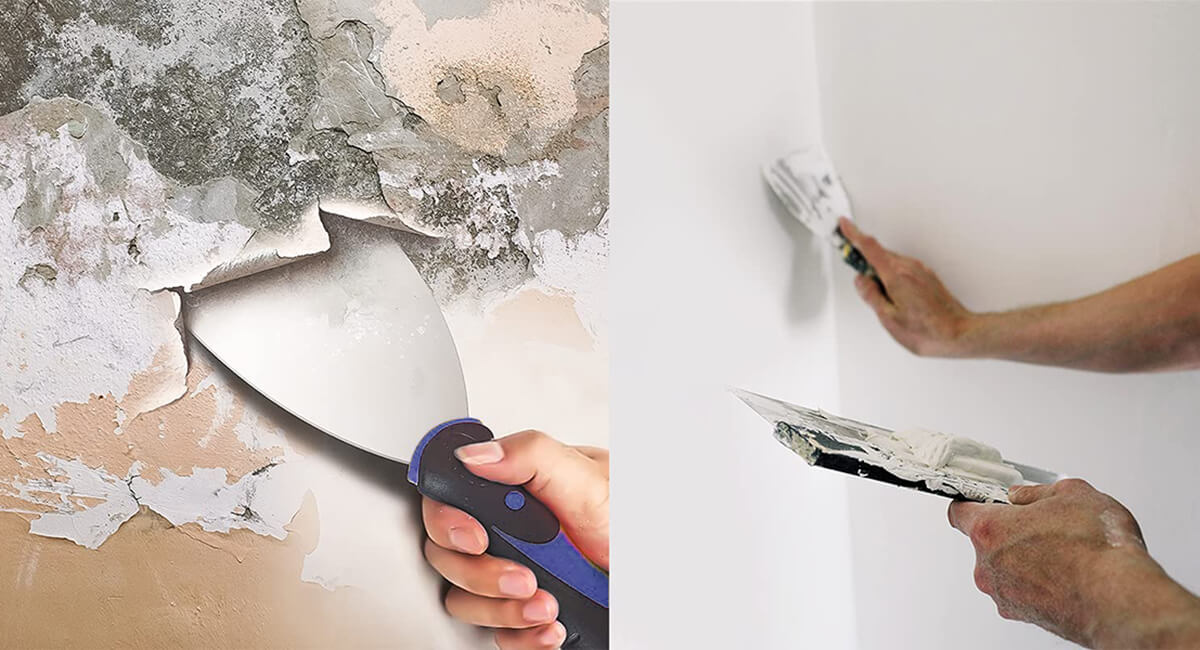
- Using a putty knife for drywall taping: the narrow, firm blade struggles to spread joint compound evenly over seams, leaving visible lines, uneven surfaces, and poor feathering. This increases sanding and touch-ups.
- Using a taping knife for small holes or cracks: the wide, flexible blade is too large for precise work, often resulting in excess compound, messy edges, and longer cleanup times.
Mistakes like these slow down work and create unprofessional results.
Tips for choosing the right tool
Selecting the right knife makes any repair faster and more professional. Keep these tips in mind when building your toolkit:
- Consider the repair size: use a wide taping knife for large drywall seams and a small putty knife for tiny holes or cracks.
- Check blade flexibility: flexible blades spread compound smoothly, while firm blades are best for scraping or precise work.
- Look for quality materials: stainless steel or high-quality carbon steel resists bending and rust, ensuring consistent results.
- Focus on durability: a well-made handle and blade lasts longer and feels comfortable during extended use.
Choosing the right tool from the start ensures a smooth, professional finish. CRESTONE offers high-quality putty knives and taping knives designed to help both beginners and professionals work smarter and achieve excellent results.
Building your toolkit: essential knives for home repairs
For homeowners starting out, the right set of knives makes repairs faster, easier, and more professional. Here are the essentials:
- 1.5-inch stiff putty knife: perfect for filling small holes and cracks, or scraping old paint. The firm blade allows precise control for detailed work.
- 6-inch flexible taping knife: ideal for spreading joint compound on small drywall seams, embedding tape, and feathering edges. Its flexibility ensures a smooth finish.
- 10–12-inch flexible taping knife: excellent for wider seams, skim-coating walls, and covering large areas quickly and evenly.
For best results, use a mix of knive materials: stainless steel knives for taping and skim-coating, and carbon steel knives for scraping and small repairs.
With these essentials, your toolkit will support most home repair and drywall projects.
Conclusion
Although taping knives and putty knives may look similar, their purposes are very different. A taping knife excels at finishing drywall, spreading joint compound, embedding tape, and skim-coating large surfaces. A putty knife is ideal for minor repairs, scraping, and precise tasks like filling nail holes or small cracks.
Using the right tool can ensures a clean, professional finish. Keeping both knives in your toolkit prepares you for any repair or drywall project.
For reliable, high-quality knives designed for both beginners and professionals, trust CRESTONE — helping you work smarter and achieve flawless finishes.
Frequently asked questions
What size taping knife should beginners start with?
A 6- or 8-inch taping knife is ideal for beginners. It offers better control and is easier to maneuver than larger 12- or 14-inch knives, which are generally used by experienced drywall finishers.
Which tool is more versatile overall?
The putty knife is more versatile, suitable for patching, scraping, spreading, and mixing various materials. The taping knife is highly effective but mainly for drywall finishing.
Can both tools be made of plastic instead of metal?
Yes. Plastic putty and taping knives are inexpensive and suitable for light tasks, but they lack the durability and precision of stainless steel or high-quality carbon steel blades.