

what is the right pressure washer PSI
Pressure washers are highly effective for cleaning everything from muddy driveways to moldy siding. However, not all pressure washers are the same, especially when it comes to pounds per square inch (PSI). Using the correct pressure is essential, many people either use excessive pressure and cause surface damage or use insufficient pressure and struggle to remove stubborn dirt. Understanding PSI helps achieve the right balance of power and precision, ensuring effective cleaning without causing unnecessary damage. Whether washing a car, preparing a deck for staining, or removing years of buildup from a walkway, using the appropriate PSI allows for a thorough clean while avoiding costly mistakes.

Understanding PSI and how it works
PSI, or pounds per square inch, measures the force of a pressure washer’s water stream and the amount of pressure applied to a surface during cleaning. It can be compared to the machine’s “scrubbing intensity.” A higher PSI produces a stronger water jet, making it more effective at removing dirt, grime, and other debris. However, greater pressure also increases the risk of damaging softer surfaces, so the PSI level should match the surface being cleaned and the type of dirt or buildup.
How does GPM complement PSI?
PSI alone does not determine a pressure washer’s cleaning performance. It works together with GPM, or gallons per minute, which measures the volume of water flowing through the nozzle. While PSI determines the force of the spray, GPM represents the machine’s “rinsing speed.” Together, PSI and GPM determine the overall cleaning power and efficiency of a pressure washer.
A pressure washer with high PSI but low GPM can loosen dirt effectively, but it may take longer to rinse it away, making it less effective for large or heavily soiled areas. For example, a pressure washer with 3,000 PSI and 4 GPM will clean faster and more thoroughly than one with the same PSI and only 2 GPM because it delivers more water while maintaining the same pressure.
Why is choosing the proper PSI important
Choosing the correct PSI for your pressure washer is important because using the improper pressure can either leave surfaces unclean or cause permanent damage. If the PSI is too low, it may not have enough power to remove stubborn stains, mold, or embedded dirt, resulting in wasted time and water. On the other hand, excessive pressure can damage paint, wood, siding, concrete, and other delicate surfaces.
Different surfaces and types of grime require different pressure levels. For example, a car’s painted surface needs much less pressure than a grease-stained driveway, while softwood decking cannot withstand the same force as a concrete patio. Matching the PSI to the cleaning task helps achieve effective results while protecting the surface from damage.
Choosing the right PSI for your cleaning tasks
Pressure washers come in different PSI ranges, each designed for specific cleaning jobs.
Light-duty cleaning: 1,300 to 1,900 PSI
Light-duty pressure washers operate between 1,300 and 1,900 PSI, making them suitable for small household cleaning tasks. These models are typically electric, compact, lightweight, quieter, and easier to maintain than gas-powered units. Although they produce lower pressure, they effectively remove light dirt and grime when used with the correct nozzle and detergent without damaging delicate surfaces.
Advantages
- Safe for delicate surfaces
- Easy to use and maintain
Limitations
- Not suitable for heavy stains or large cleaning areas
Ideal applications
- Cars
- Bikes
- Outdoor furniture
- Garden tools
- Windows
- Small decks
- Patios
- Vinyl siding with light buildup
This PSI range is a practical choice for routine home maintenance and other gentle cleaning tasks.
Medium-duty cleaning: 2,000 to 2,800 PSI
Medium-duty pressure washers operate between 2,000 and 2,800 PSI, offering a balance of cleaning power and control. Available in both electric and gasoline pressure washer models, they are suitable for a wide range of residential cleaning tasks and can remove more stubborn dirt and stains than light-duty units. This PSI range provides effective cleaning while remaining safe for most durable surfaces when used correctly.
Advantages
- Versatile for a variety of home cleaning projects
- Provides a good balance of power and safety
Limitations
- May be too powerful for very delicate surfaces
Ideal applications
- Driveways
- Sidewalks
- Fences
- Brick walls
- Wood decks with moderate buildup
- Patios
- Siding
- Preparing surfaces for painting or sealing
- Removing mold from exterior walls
With the correct nozzle and proper technique, medium-duty pressure washers can clean effectively without damaging surfaces. They are powerful enough for tougher jobs while remaining manageable for occasional users, making them a practical choice for routine exterior home maintenance.

Heavy-duty cleaning: 2,900 to 3,300 PSI
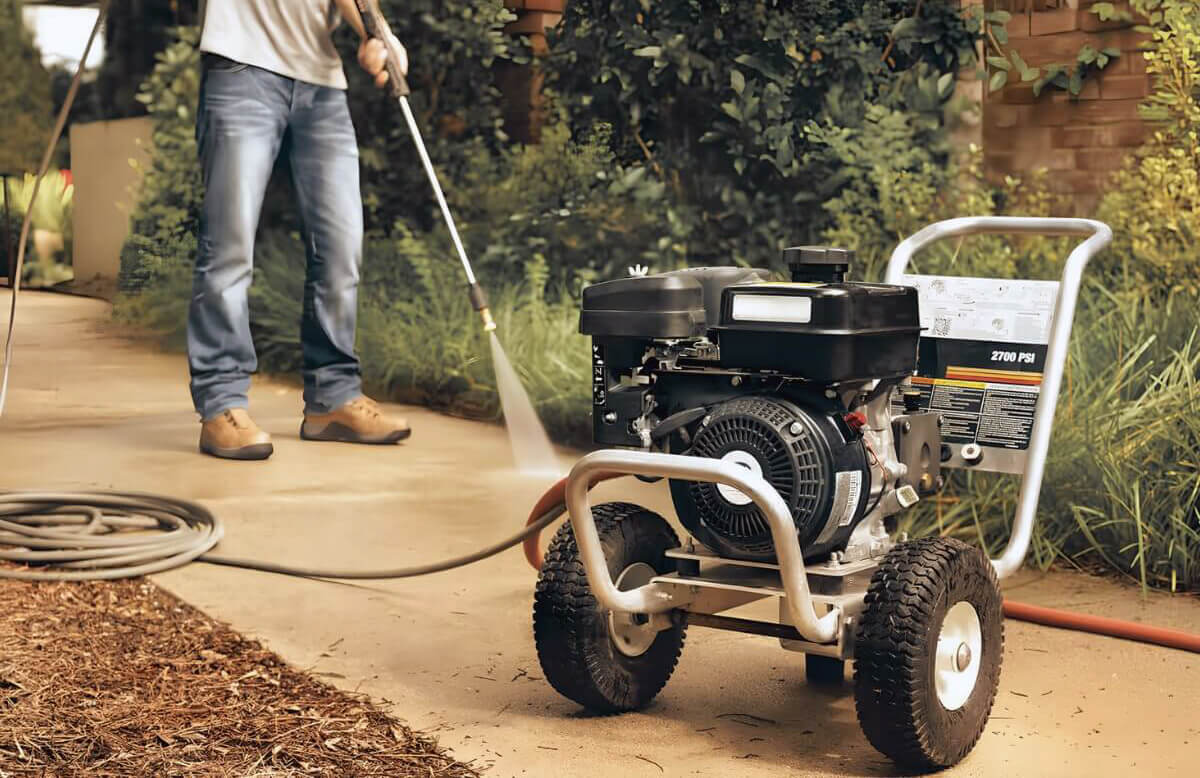
Heavy-duty pressure washers operate between 2,900 and 3,300 PSI and are designed for demanding cleaning tasks that require greater cleaning power. Most models are gas-powered, with durable pumps and higher flow rates, making them effective for removing thick grease, oil, deeply embedded dirt, and stubborn stains. They are well suited for property owners, contractors, and users who need reliable performance for frequent or large-scale cleaning jobs.
Advantages
- Strong cleaning power for stubborn dirt and stains
- Suitable for frequent and heavy-duty cleaning tasks
Limitations
- Can damage delicate surfaces if used improperly
- Heavier and less portable than lighter models
Ideal applications:
- Concrete driveways
- Garage floors
- Large commercial vehicles
- Heavy equipment
- Removing rust or paint
- Restoring oil-stained concrete
- Cleaning heavily soiled siding or stone
- Preparing surfaces before repainting or renovation
Because of its high pressure, this PSI range should be used with care. Using the correct nozzle, maintaining a safe distance, and wearing protective gear can help reduce the risk of surface damage or injury.
Extra heavy-duty and commercial use: 3,300+ PSI
Pressure washers rated at 3,300 PSI and above are designed for extra heavy-duty and commercial cleaning tasks that require maximum cleaning power. These machines are commonly gas- or diesel-powered and feature durable components for extended use. They are suitable for industrial applications, large-scale projects, manufacturing plants, construction sites, and agricultural work, where they can remove the toughest dirt, coatings, and construction materials.
Advantages
- Maximum cleaning power for demanding jobs
- Designed for professional and industrial use
Limitations
- Expensive, heavy, and require experience to operate safely
Ideal applications
- Large-scale property cleaning
- Graffiti removal
- Stripping old paint or sealant
- Cleaning large concrete areas
- Washing heavy machinery and farm equipment
- Other specialized cleaning tasks
Due to their extremely high pressure, these machines must be operated with caution to avoid surface damage, property damage, or personal injury. They are typically used by trained professionals.
Understanding these PSI ranges helps you choose the right pressure washer for your cleaning needs while protecting surfaces from unnecessary damage.
Factors that affect your pressure washer’s working PSI
The PSI listed on a pressure washer represents its maximum rating, but the actual cleaning power depends on several factors that affect how it performs in use. Understanding these helps ensure safe and effective cleaning.
Nozzle selection
The nozzle has a direct effect on pressure and spray coverage. Pressure washers usually come with color-coded nozzles, each producing a different spray angle and pressure level.
Using the correct nozzle helps match the right force to the task, as an incorrect choice can cause damage even if the PSI is appropriate. It is generally recommended to start with a wider spray angle and adjust if needed.
Distance from the surface
The distance between the nozzle and the surface also affects the effective pressure. Closer distance increases pressure, while a wider distance reduces it. Starting about 1–2 feet away and gradually moving closer allows better control and reduces the risk of damage.
Detergents and cleaning chemicals
Detergents and cleaning solutions help break down dirt, grease, and stains, allowing effective cleaning at lower PSI levels. This reduces the need for high pressure, making cleaning faster while helping protect surfaces.
By considering nozzle type, distance, and cleaning agents, you can optimize working PSI for safer and more efficient cleaning across different tasks.
Safety risks of using too high PSI
Using a pressure washer with excessive PSI can cause damage to both surfaces and people.
Surface damage
High-pressure water can damage different materials during cleaning. Concrete or asphalt may become etched or chipped, while wood can splinter or develop a rough surface. Painted surfaces, including vehicles and houses, may have paint or coatings stripped away. Even minor misuse can result in permanent marks or costly repairs.
Personal safety
Water at high PSI can be dangerous as it is strong enough to cause cuts, bruises, or more serious injuries if it contacts the body. Safety gear such as goggles, long sleeves, and closed-toe shoes should always be worn. The spray should never be directed at people, pets, or oneself, and bystanders should be kept at a safe distance.
Protective tips and best practices
- Test the pressure on a small, hidden area before starting a full cleaning task
- Maintain a safe distance, as getting closer increases effective PSI
- Use the correct nozzle for the surface being cleaned
- Avoid spraying in one spot for too long to prevent damage
Following these precautions and using the correct PSI helps ensure safe and effective cleaning while protecting surfaces, people, and property.
Conclusion
Whether for light household maintenance or heavy-duty commercial work, proper PSI plays an important role in performance and safety. Matching the pressure level and right equipment to the surface and cleaning task ensures thorough results without causing damage.
Frequently asked questions
Do electric pressure washers have enough PSI?
Yes, electric pressure washers with 1,300 to 2,000 PSI are enough for most residential tasks, including car washing, deck cleaning, and siding maintenance.



May Ge
Outdoor Machinery Export Manager 6-Yr Exp 🌍 ∣ BSCI, EPA, EURO V, CE ∣ Generator, High-pressure Washer, Water Pump, Engine, Floor Scrubber ∣ 🚀 24/7 Second Reply
TAIZHOU BISON MACHINERY CO.,LTD | Ningbo University of Technology
Our related blog

how to pressure wash your home
Ready to refresh your home’s exterior? This complete homeowner’s guide will teach you how to pressure wash your home correctly.

how does a pressure washer work
Have you ever wondered how pressure washers clean so effectively? Learn how they work, why they are so effective, and how they can change how you clean.

electric vs. gas pressure washers
Compare electric and gas pressure washers to determine which one is best suited for your home or commercial cleaning needs. Learn the pros, cons, and uses of each type etc.

why does my pressure washer have low pressure?
our team of experts will walk you through the most common reasons for low pressure on your pressure washer and show you how to get your machine back to peak performance.