

electric vs. gas pressure washers
Pressure washers are powerful tools for deep cleaning outdoor surfaces like decks, driveways, siding, and vehicles. By using high-pressure water, they remove dirt, grime, and stains quickly and efficiently, saving time and effort compared to manual cleaning.
However, not all pressure washers are the same. Choosing the right pressure washer can greatly affect efficiency, convenience, and cleaning results. Electric models are often favored for light-duty home use, while gas pressure washers are designed for tougher, more demanding jobs.
At MATCHUP, we understand that the best option depends on your needs, budget, and working environment. Whether you’re a homeowner handling routine cleaning or a professional tackling heavy-duty projects, knowing the differences will help you make the right decision.
In this article, we’ll compare electric and gas pressure washers, breaking down their pros, cons, and best applications to help you choose with confidence.

Electric pressure washers
Electric pressure washers are a popular option for homeowners who want a convenient, affordable, and eco-friendly solution for outdoor cleaning.
Powered by an electric motor, these machines draw in water and force it through a narrow nozzle using a pump, creating a high-pressure spray that removes dirt, mold, and grime from a variety of surfaces. Most high electric pressure washers plug into a standard 220-volt outlet, making them easy to use without special power requirements.
Typically producing between 1,300 and 2,300 psi, electric pressure washers are best suited for light to medium-duty tasks such as cleaning siding, patios, vehicles, and outdoor furniture. They are also quieter than gas models and require minimal maintenance since there’s no fuel, oil, or engine servicing involved.
Lightweight and compact, electric pressure washers are easy to transport and store. With zero emissions, they are more environmentally friendly and can even be used in enclosed or semi-indoor spaces when proper drainage and ventilation are available. While they don’t deliver the same power as gas pressure washers, they offer a simple and practical cleaning solution for everyday household needs.
Advantages
Quiet operation: much quieter than gas-powered models, ideal for residential areas
Lightweight and portable: easy to move, store, and handle
Low maintenance: no fuel, oil, or engine components to maintain
Zero emissions: eco-friendly and safe around gardens and patios
Lower cost: affordable upfront and cheaper to operate
Ideal for light to medium tasks: well-suited for routine home cleaning
Disadvantages
Lower power output: usually 1,300–2,000 psi, less effective on heavy stains or large areas
Requires electricity: must be near a power outlet or use an extension cord
Limited heavy-duty use: not designed for professional or industrial cleaning
Continuous power dependency: cleaning time depends on uninterrupted access to electricity
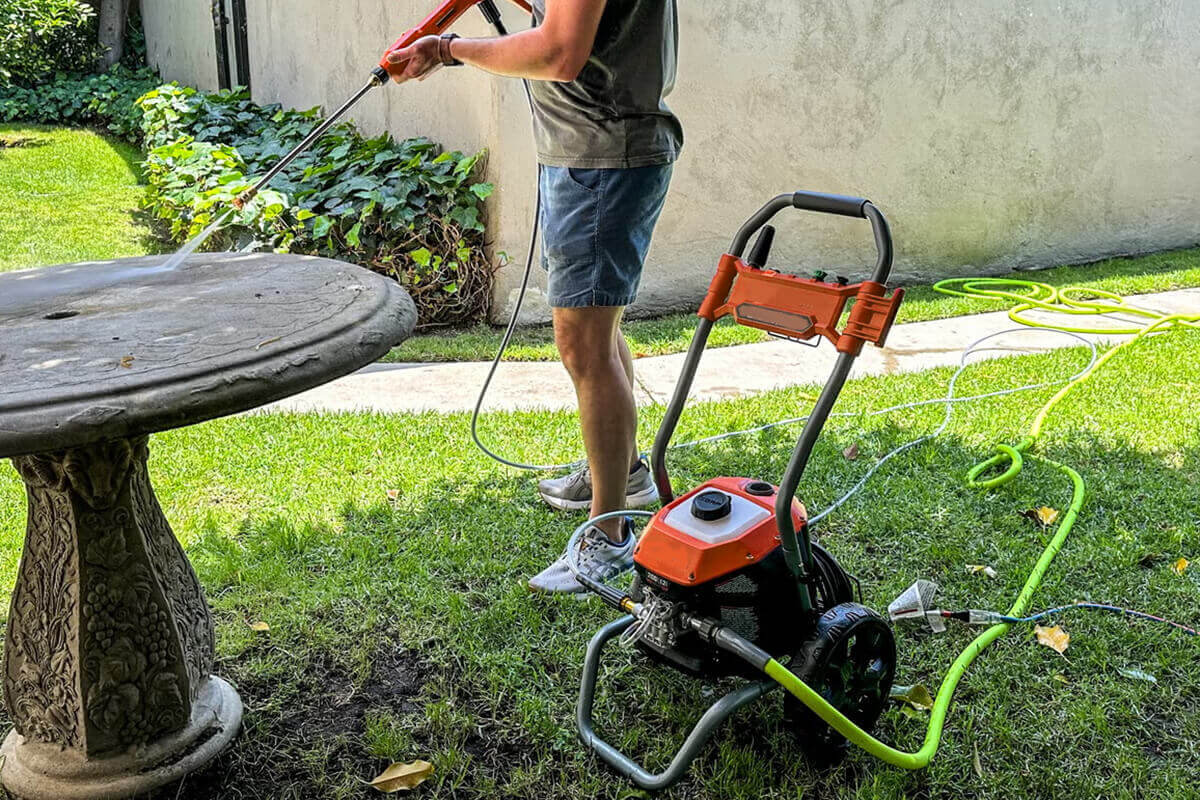
Gas pressure washers
Gas pressure washers are designed for power and heavy-duty outdoor cleaning, powered by gasoline engines, these machines drive a high-pressure water pump without relying on electricity. This design allows for greater mobility, making gas pressure washers ideal for large properties, job sites, and remote locations where power outlets aren’t available.
Most gas models produce between 2,500 and 4,000+ psi, with water flow rates ranging from 2.0 to 4.0 gpm. This combination of high pressure and strong water flow makes them well suited for removing oil stains from concrete, stripping paint, cleaning large driveways or decks, and preparing surfaces for refinishing.
Because of their performance, gas pressure washers are widely used by contractors, professionals, and users with frequent or heavy-duty cleaning needs. However, they are louder, heavier, and require more maintenance than electric models. Routine upkeep includes oil changes, air filter cleaning, fuel management, and proper storage during colder months. Gas models also produce exhaust fumes and should only be used in well-ventilated outdoor areas.
Despite these considerations, gas pressure washers remain the preferred option for tough, large-scale cleaning tasks where power and speed matter most.
Advantages
Higher psi: typically 2,800–4,000+ psi for tackling stubborn dirt and grime
Faster cleaning: higher gpm allows large areas to be cleaned more quickly
Excellent portability: no electrical outlet required, ideal for remote locations
Durable construction: built for demanding, long-term use
Extended run time: suitable for long cleaning sessions without power limitations
Disadvantages
Loud operation: gas engines can be noisy, especially in residential areas
Heavy and bulky: more difficult to move and store
Higher maintenance needs: requires fuel, oil changes, and engine care
Exhaust emissions: not suitable for indoor or enclosed spaces
Higher cost: more expensive upfront than electric models
More Skill Needed: high pressure requires careful handling to avoid surface damage
The main differences between electric and gas pressure washers
Performance
When evaluating pressure washer performance, two key metrics matter most:
Psi (pounds per square inch): measures water pressure. Higher psi provides greater force to remove dirt, grime, and stains.
Gpm (gallons per minute): measures water flow. Higher gpm moves more water, helping rinse debris away faster.
The combination of psi and gpm determines overall cleaning power. In general, higher values mean faster and more efficient cleaning.
Electric pressure washer performance
Electric pressure washers are designed for light to medium-duty tasks. Most models operate within a range of 1,300 to 2,300 psi and deliver 1.2 to 1.8 gpm, making them well suited for:
- Washing cars, motorcycles, and scooters
- Cleaning patio furniture and grills
- Washing siding and windows
- Removing light dirt and splatter from decks or walkways
While effective for routine household cleaning, electric models may struggle with deeply embedded stains or heavy buildup on concrete, brick, or industrial surfaces.
Gas pressure washer performance
Gas pressure washers are built for heavy-duty applications. They typically produce 2,500 to 4,000+ psi with a water flow rate of 2.0 to 4.0 gpm, allowing them to handle demanding tasks such as:
- Removing oil stains from driveways
- Stripping paint or graffiti
- Cleaning large decks, fences, or siding
- Washing construction equipment or farm machinery
Thanks to their higher pressure and water flow, gas pressure washers complete large or heavily soiled jobs faster and more efficiently than electric models.

Portability and ease of use
Portability and ease of use are important factors when choosing a pressure washer, especially for frequent cleaning or quick jobs. Electric and gas pressure washers differ noticeably in weight, size, and setup, which can affect how convenient they are to use.
Electric pressure washer portability
Electric pressure washers are lightweight, compact, and easy to maneuver. Most models weigh between 15 and 35 pounds and feature built-in handles or wheels for simple transport. Their small footprint makes them ideal for homes with limited storage space, such as small garages, sheds, or apartments.
The main limitation is their dependence on a power outlet. Your working range is restricted by the length of the power cord and garden hose, and extension cords are generally discouraged due to potential safety risks and motor damage.
Despite this, electric pressure washers are extremely user-friendly. They start instantly—just plug in, connect the hose, and press a button—making them a great choice for beginners.
Gas pressure washer portability
Gas pressure washers are larger and heavier, typically weighing 60 to 100 pounds or more. They are usually mounted on a sturdy frame with large wheels designed to handle uneven terrain like gravel or construction sites. While easy to roll, lifting or loading them into a vehicle may require extra effort or assistance.
Their biggest portability advantage is independence from electrical outlets. Since they run on fuel, gas pressure washers can be used anywhere, making them ideal for large properties, remote areas, farms, and job sites.
However, they require more effort to start and operate. Most models use a recoil pull-start and may need fuel system priming, similar to a lawnmower. Some high-end units offer electric start, but overall, gas models demand more user attention than electric washers.
Maintenance and longevity
Maintenance requirements and expected lifespan are important factors when choosing between electric and gas pressure washers. These two types differ significantly in upkeep effort and long-term durability.
Electric pressure washer maintenance
Electric pressure washers are easy to maintain because they do not use combustion engines. There’s no need to manage fuel, spark plugs, or oil changes. Routine maintenance typically includes:
- Checking and cleaning the water inlet filter
- Inspecting hoses and nozzles for clogs or wear
- Storing the unit properly to prevent freezing or electrical damage
These simple tasks make electric models ideal for users who value convenience and minimal upkeep. However, many electric pressure washers are built with lighter components and are not designed for frequent or heavy-duty use. Budget models may have a shorter lifespan, while higher-end electric units—especially those with brushless motors and high-quality pumps—can last much longer when properly maintained.
Gas pressure washer maintenance
Gas pressure washers deliver greater power but require more regular maintenance to stay in good working condition. Common upkeep tasks include:
- Changing engine oil at recommended intervals
- Cleaning or replacing the air filter
- Inspecting and replacing spark plugs
- Draining old fuel or using a fuel stabilizer during storage
- Winterizing the pump with antifreeze or pump saver
Neglecting maintenance can lead to hard starting, reduced performance, or serious engine damage. That said, when properly cared for, gas pressure washers tend to have a longer service life and are better suited for demanding, high-frequency use.
Because of their durability and ability to withstand sustained high-pressure operation, gas models are often preferred by professionals and experienced diy users who rely on consistent, long-term performance.
Cost considerations
Cost is a key factor when choosing between electric and gas pressure washers. Beyond the initial purchase price, it’s important to consider ongoing expenses such as fuel, maintenance, and repairs. Understanding the full cost picture helps you choose a model that fits both your cleaning needs and your budget.
upfront costs
Electric pressure washers are generally more affordable. Entry-level models often start around $100, with mid-range options typically priced between $150 and $250. Even high-end residential electric units rarely exceed $400, making them a cost-effective choice for homeowners who need a simple, reliable cleaning tool.
Gas pressure washers come with a higher initial investment. Basic models usually start around $300, while more powerful or commercial-grade units can range from $500 to $1,000. The higher price reflects their increased power, durability, and ability to handle demanding tasks.
operating costs
Electric pressure washers are inexpensive to operate. They run on household electricity and do not require fuel or oil. Routine operating costs are minimal, with only occasional replacement of parts such as hoses or nozzles.
Gas pressure washers have higher operating expenses. They require gasoline, engine oil, and sometimes fuel stabilizers. Over time, these recurring costs can add up, particularly for frequent users. Repairs and replacement parts may also increase long-term expenses.
maintenance and repair costs
Electric pressure washers have fewer moving parts, which reduces the risk of mechanical failure. Repairs are usually simple and relatively inexpensive, and many homeowners choose to replace heavily worn units rather than repair them.
Gas pressure washers demand more frequent maintenance and are more complex to service. Long-term ownership may include costs such as:
Annual tune-ups
Engine or pump part replacements
Professional servicing
These ongoing expenses should be factored into the total cost of ownership.
value over time
For occasional, light-duty cleaning, electric pressure washers provide excellent value with a low upfront and operating cost. However, for frequent or heavy-duty use, a gas pressure washer can deliver better long-term value despite higher costs, thanks to faster cleaning, stronger performance, and greater durability.
Noise and emissions
Noise and emissions are often overlooked when choosing a pressure washer, but they can greatly affect comfort, safety, and environmental impact—especially in residential areas or with frequent use.
Noise level
Electric pressure washers are much quieter than gas models. Most operate at 60 to 80 decibels, similar to normal conversation or a vacuum cleaner. This low noise output makes them well suited for neighborhoods, townhomes, and other noise-sensitive environments where minimizing disturbance is important.
Gas pressure washers are significantly louder, typically producing 85 to 100 decibels, comparable to a lawnmower or chainsaw. Extended exposure at this level can be harmful to hearing, so ear protection is strongly recommended. Because of their noise, gas models may not be ideal for residential use or areas with strict noise restrictions.
Emissions and environmental impact
Electric pressure washers produce zero direct emissions during operation. Since they do not burn fuel, they release no exhaust fumes, making them safer for use in enclosed or semi-enclosed spaces when proper drainage and ventilation are provided. They are also more environmentally friendly, especially when powered by electricity from renewable sources.
Gas pressure washers emit exhaust gases as a result of fuel combustion. These fumes can be hazardous in enclosed or poorly ventilated areas and contribute to air pollution. For safety reasons, gas models should only be used outdoors in open, well-ventilated spaces.
Additionally, gas-powered pressure washers rely on fossil fuels, increasing their carbon footprint. While they offer higher power, this performance comes at a greater environmental cost.
Setup and storage
Setup and storage convenience can strongly influence how often you use a pressure washer and how enjoyable the experience is. While both electric and gas models are effective, they differ greatly in setup time, complexity, and storage needs.
Electric pressure washer setup
Electric pressure washers are built for fast, hassle-free setup. Most models require only a few basic steps:
Connect the garden hose
Attach the high-pressure hose and spray gun
Plug into a grounded electrical outlet
Turn on the water and press the power switch
Within minutes, the unit is ready to use. There’s no fuel to add, no engine warm-up, and no mechanical adjustments. This simplicity makes electric pressure washers especially appealing for casual users and quick cleaning tasks.
Gas pressure washer setup
Gas pressure washers require more preparation before use. In addition to hose connections, you typically need to:
Fill the fuel tank with fresh gasoline
Check and top off engine oil
Prime the engine or adjust the choke, depending on the model
Start the engine using a recoil pull or electric starter
Allow the engine to warm up before cleaning
This added setup time is manageable but less convenient, particularly for short or frequent jobs.
Electric pressure washer storage
Electric pressure washers are compact and easy to store. Many models include built-in holders for hoses, nozzles, and power cords, allowing them to fit neatly in a garage, shed, or storage closet. Since they don’t use fuel, they can be stored indoors without concerns about fumes or fire hazards.
They do require protection from freezing temperatures. Draining any remaining water or using a pump saver before winter storage helps prevent internal damage.
Gas pressure washer storage
Gas pressure washers need more storage space and additional care. Their larger size and weight usually require a dedicated area in a garage or shed. For long-term or seasonal storage, you should:
Drain the fuel or add a fuel stabilizer
Check or change the engine oil
Winterize the pump with antifreeze or pump saver
Store the unit in a well-ventilated area due to fuel vapors
Improper storage can lead to hard starting, reduced performance, or engine damage.
How to choose the right pressure washer
Selecting the right pressure washer is simple if you evaluate your needs, usage, and lifestyle. Consider these key factors:
Assess your cleaning needs
Electric washers: best for light-to-medium tasks like washing cars, small patios, garden furniture, and small decks (1,300–2,000 psi).
Gas washers: ideal for heavy-duty jobs such as driveways, large decks, commercial surfaces, and tough stains (2,800–4,000+ psi).
Frequency of use
Occasional cleaning: electric washers are convenient and low-maintenance.
Frequent or extended cleaning: gas washers offer durability and power for larger projects.
Storage space
Electric washers are smaller and easier to store.
Gas washers are bulkier and need more storage space and access for refueling and maintenance.
Budget considerations
Electric washers are more affordable upfront and cheaper to operate.
Gas washers require a higher initial investment but provide long-term value for frequent or heavy-duty use.
Noise level & environmental impact
Electric washers are quiet and produce zero emissions.
Gas washers are louder and emit exhaust fumes, suitable only for outdoor use.
Portability & weight
Electric washers are lightweight but need a nearby power source.
Gas washers are fully portable without electricity but heavier and bulkier.
Maintenance willingness
Electric washers are low-maintenance with no fuel, oil, or engine checks required.
Gas washers require regular maintenance, including oil changes, spark plug checks, and fuel management.
When to choose an electric pressure washer
An electric pressure washer is a good choice if you:
- Handle small to medium-sized cleaning jobs
- Live in a noise-sensitive area
- Prefer minimal maintenance
- Want a more affordable option
- Plan to clean cars, bikes, decks, or windows
- Use a pressure washer occasionally for diy tasks
These models are ideal for homeowners who want convenience, quiet operation, and reliable performance for routine cleaning.
When to choose a gas pressure washer
A gas pressure washer is the better option if you:
- Clean large or heavily soiled surfaces regularly
- Need to remove paint, grease, or oil stains
- Require faster and more powerful cleaning
- Work in areas without easy access to electricity
Gas models are best for professionals, property owners with large spaces, or anyone who needs maximum power and efficiency.
Conclusion
At MATCHUP, we know that selecting the right pressure washer is key to efficient and effective outdoor cleaning.
Electric pressure washers are ideal for light-duty tasks. They are quiet, easy to set up, low-maintenance, environmentally friendly, and cost-effective.
Gas pressure washers deliver higher power, improved mobility, and greater durability, making them perfect for heavy-duty or frequent cleaning.
For homeowners, electric models provide convenience and reliable performance. For professionals or those tackling large, demanding jobs, gas washers offer efficiency and long-term durability.
Always check manufacturer specifications to ensure your washer meets your power, safety, and longevity needs. Contact MATCHUP today to find the perfect pressure washer and elevate your outdoor cleaning experience.
Can I use a gas pressure washer indoors?
No. Gas pressure washers emit carbon monoxide and should only be used outdoors in well-ventilated areas. Indoor use is hazardous.
How long do pressure washers typically last?
Electric pressure washers can last 3-5 years for casual users with proper care. With regular maintenance, gas models last 5-10 years or more.




May Ge
Outdoor Machinery Export Manager 6-Yr Exp 🌍 ∣ BSCI, EPA, EURO V, CE ∣ Generator, High-pressure Washer, Water Pump, Engine, Floor Scrubber ∣ 🚀 24/7 Second Reply
TAIZHOU BISON MACHINERY CO.,LTD | Ningbo University of Technology
Our related blog

what is the right pressure washer PSI
Confused about pressure washer PSI? Learn how to select the ideal PSI for safe and effective cleaning on any surface. Read on to learn more.

how to pressure wash your home
Ready to refresh your home’s exterior? This complete homeowner’s guide will teach you how to pressure wash your home correctly.

how does a pressure washer work
Have you ever wondered how pressure washers clean so effectively? Learn how they work, why they are so effective, and how they can change how you clean.

why does my pressure washer have low pressure?
our team of experts will walk you through the most common reasons for low pressure on your pressure washer and show you how to get your machine back to peak performance.