

how does a governor work on a small engine
Small engines power many tools and machines that make daily tasks easier, from mowing the lawn and running generators during outages to operating construction equipment. While these engines may seem simple, they rely on critical components for reliable and efficient performance. One often overlooked but essential part is the governor.
Ever wondered why your lawn mower doesn’t race out of control on thick grass, or how a generator keeps power tools running smoothly under heavy load? The secret lies in the governor. Acting as the engine’s automatic speed regulator, it keeps the engine running at a consistent speed, regardless of load. Without it, small engines can stall, lose efficiency, or suffer damage from running too fast.
Understanding how a governor works provides insight into the mechanics of small engines and helps you maintain and troubleshoot your equipment. In this article, MATCHUP, a professional governor manufacturer in China, will explain what a governor is, why it’s essential for small engines, and the main types—mechanical and pneumatic—so you can see how these tiny guardians keep your engines under control.

What is a governor in a small engine?
A governor is a mechanical or electronic device that automatically regulates an engine’s speed, keeping it steady regardless of changes in load. In simple terms, it acts like a smart controller, ensuring the engine doesn’t run too fast or too slow. By maintaining a consistent RPM (revolutions per minute), a governor prevents problems such as over-speeding, which can damage the engine, or stalling, which stops the engine from running.
For example, when mowing your lawn and the blade hits a thick patch of grass, the load on the engine increases. The governor detects this change and adjusts the fuel or throttle to maintain the preset speed, keeping the engine running smoothly.
Why do small engines need a governor?
Small engines are designed to operate within specific speed ranges to ensure optimal performance and longevity. Operating too quickly or slowly can damage the engine, waste fuel, and increase pollutants.
A governor’s key benefits include:
Maintains constant speed: Prevents engine speed from fluctuating under varying loads and avoids dangerous over-speed situations.
Prevents engine damage: Stops the engine from overrevving, reducing the risk of mechanical failure.
Improves fuel efficiency: Keeps the engine running optimally to avoid wasting fuel.
Reduces noise and vibration: Stable speed ensures smooth, quieter operation.
Basic principle of how a governor works
A governor automatically controls engine speed by regulating the fuel and air entering the engine. It constantly monitors the engine’s RPM and adjusts the throttle to keep speed stable, regardless of changes in load. The key principle behind its operation is feedback control: the governor detects changes in engine speed and reacts to maintain the set point.
Increased load: When the engine encounters more resistance—like a lawn mower hitting thick grass or a generator powering a heavy tool—the engine naturally slows down. The governor senses this drop and opens the throttle, letting in more fuel and air to restore the target speed.
Decreased load: When the load becomes lighter—such as the mower moving over thin grass or the generator powering off a heavy tool—the engine tends to speed up. The governor reduces the throttle opening to prevent over-speeding and maintain a steady engine speed.
Idle or no load condition: When the engine runs without much load, such as a lawn mower gliding over thin grass or a generator powering a small light, the governor allows the throttle to stay slightly open to maintain normal idle speed.
This constant balancing act ensures the engine maintains a nearly constant speed. Traditional governors use mechanical components like flyweights and springs, while modern systems use electronic sensors and actuators.
Simply put, the governor acts like a speed manager, automatically accelerating or decelerating the engine as needed. By continuously adjusting the throttle in response to load changes, it ensures efficient, safe, and reliable operation.
Types of governors used in small engines
Small engines rely on governors to maintain steady speed under varying loads. These governors are broadly categorized into mechanical and electronic types.
Mechanical governors
Components of a mechanical governor
A mechanical governor relies on several key components that work together to maintain a consistent engine speed. Each part plays a vital role in regulating throttle and responding to changes in load:
Flyweights / air vane
Flyweights (centrifugal governor): Weighted arms that spin with the engine shaft and move outward due to centrifugal force, controlling the governor arm.
Air Vane (Pneumatic Governor): Moves in response to airflow from the flywheel fan to regulate throttle.
Both detect engine speed changes and trigger automatic adjustments.
Governor shaft
A shaft attached to the crankshaft or camshaft that rotates the flywheel and transfers motion to the governor mechanism.
Linkage / lever system
Mechanical links that transmit the motion of the flyweights or air vane to the throttle, ensuring precise control of fuel and air flow.
Springs
Governor spring: Provides resistance against the governor mechanism, helping maintain the target speed.
Idle spring: Keeps the throttle slightly open when the engine is idling.
Springs balance engine responsiveness with stability.
Throttle valve / throttle plate
Controls the flow of fuel and air into the engine, moved by the governor arm through the linkage system.
Governor arm
Connects the flyweights or air vane to the throttle. Moves in response to the governor’s signals to adjust engine speed.
User control lever (speed adjustment)
Allows the operator to set the desired engine speed by adjusting spring tension or the position of the governor mechanism, controlling engine RPM.
Together, these components create a responsive system that senses load changes and continuously adjusts throttle.
Common types of mechanical governor
Centrifugal (flyweight) governor
Mechanical governors use physical components like springs, weights, levers, and linkages. They rely on centrifugal force from the engine’s rotating parts to detect speed changes. As engine speed increases, spinning weights move outward, reducing throttle; as speed drops, the weights move inward, opening the throttle. A spring often counteracts the flyweight force, and the balance between spring tension and centrifugal force determines throttle position and engine speed.
How a flyweight governor works: step-by-step
A flyweight governor is a common type of governor used in small engines. It relies on centrifugal force acting on rotating weights (flyweights) to control engine speed. Here’s how it works:
Engine starts / flyweights at rest
When the engine is stopped or idling at low speed, the flyweights hang close to the governor shaft, experiencing minimal centrifugal force.
Engine speed increases
As the engine speeds up, the governor shaft rotates faster, causing the flyweights to spin more quickly.
Centrifugal force pushes the flyweights outward
The faster rotation generates centrifugal force, moving the flyweights outward from the governor shaft.
Flyweights move a lever or linkage
The outward movement lifts or moves a lever connected to the throttle linkage, which controls the throttle valve.
Throttle valve closes slightly
The lever partially closes the throttle valve, reducing fuel and air flow and slowing the engine.
Engine slows, flyweights move inward
As engine speed drops, centrifugal force decreases, allowing the flyweights to move inward toward the shaft.
Throttle valve opens wider
The inward movement of the flyweights opens the throttle valve more, increasing fuel and air flow into the engine.
Engine speed returns to target
With more fuel and air, the engine accelerates, and the flyweights adjust their position to maintain the desired speed.
Continuous feedback loop
This cycle of flyweights moving in and out creates a continuous feedback loop, automatically regulating the throttle to keep engine speed stable under changing loads.
Air vane (pneumatic) governor
This type uses airflow from the engine’s flywheel fan to move an air vane connected to the throttle. As engine speed rises, airflow moves the vane to reduce throttle; when speed decreases, the vane opens the throttle wider to increase speed.
Electronic governors
Electronic governors use sensors (like magnetic pickups or Hall effect sensors) to monitor engine speed. A control unit (ECU) processes this data and adjusts the throttle via an actuator or servo motor. They provide more precise speed control, faster response, and easier adjustments than mechanical governors.
Each type of governor achieves the same goal—maintaining consistent engine speed—but through different methods, from simple mechanical movement to advanced electronic control, ensuring safety, performance, and engine longevity.
Common problems and maintenance tips
Even the most well-designed governor can experience issues over time. Recognizing symptoms early and performing proper maintenance helps keep small engines running smoothly.
Common symptoms of a faulty governor
Surging (“hunting”): Engine speed repeatedly rises and falls instead of staying steady.
Stalling: Engine stops unexpectedly under load or at idle.
Over-revving: Engine runs too fast, which can cause damage or unsafe operation.
Potential causes
Clogged carburetors or fuel lines: Limits fuel flow, affecting engine speed.
Worn or misadjusted springs: Governor and idle springs may lose tension, causing improper throttle response.
Binding linkages: Mechanical connections may stick, preventing smooth movement.
Worn internal parts: Flyweights, air vanes, or governor arms can degrade with age or heavy use.
Maintenance tips
Check and adjust settings: Refer to the engine or governor manual to ensure proper spring tension and throttle linkage adjustment.
Clean and lubricate parts: Keep linkages, air vanes, and mechanical components free of dirt, rust, or debris for smooth operation.
Consult service manuals: Always follow manufacturer guidelines for maintenance or troubleshooting.
Seek professional help if needed: For persistent or complex issues, a certified technician ensures safe and effective repair.
Regular maintenance and attention to governor performance help extend engine life, improve safety, and maintain consistent performance in all small engine applications.
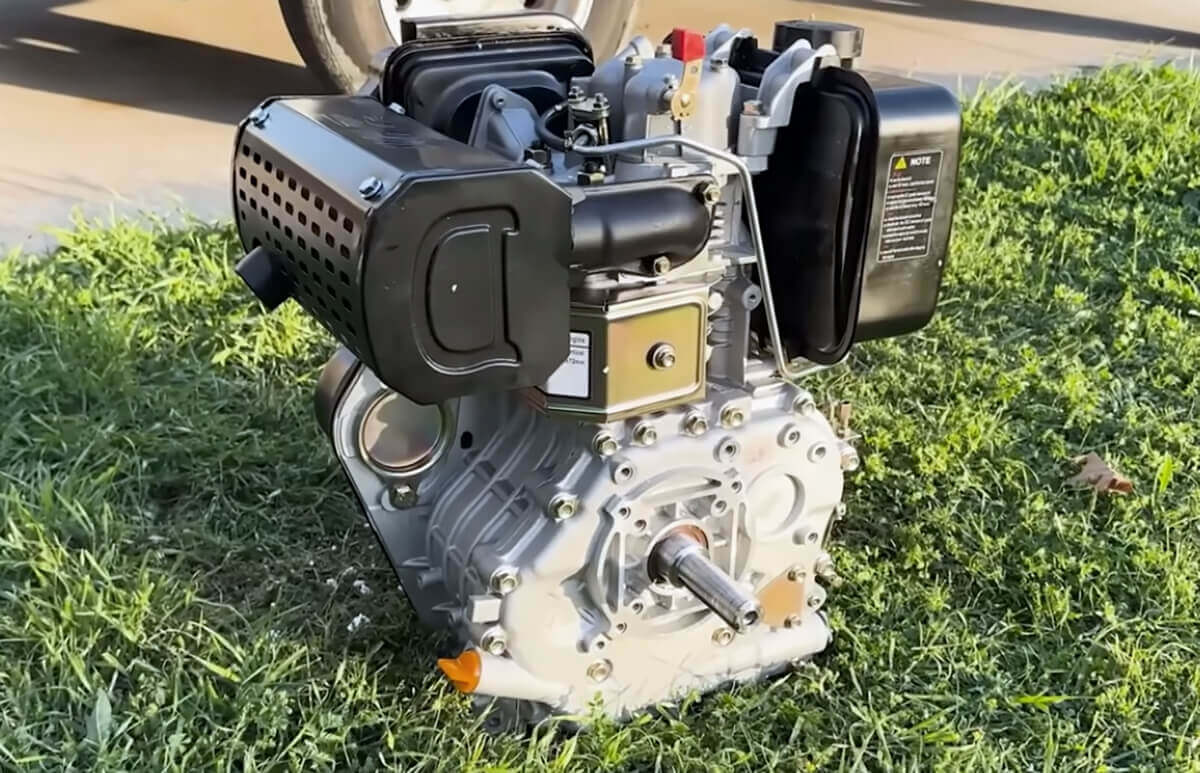
Applications of small engine governors
Governors play a crucial role in keeping small engines running smoothly across a variety of everyday tools and machines. They act as the engine’s automatic cruise control, ensuring consistent performance, safety, and longevity. Common examples include:
Lawn mowers
Governors maintain steady engine speed while cutting through thick or thin grass, preventing stalling or over-speeding and ensuring a uniform, clean cut.
Portable generators
When powering varying loads—such as switching from a few lights to heavy tools—governors automatically adjust the throttle, providing consistent electricity and protecting the engine from damage.
Pressure washers
Governors help maintain high, stable pressure even when cleaning tough surfaces, allowing for efficient and effective operation.
Small tractors
In agricultural tasks, governors keep the engine running at the right speed under different workloads, improving fuel efficiency and preventing mechanical stress.
Power tillers and other small agricultural equipment
By regulating engine speed, governors ensure smooth, safe operation while working through soil of varying resistance.
In all these applications, governors enhance reliability, performance, and safety. Without them, small engines would struggle to handle changing loads efficiently, leading to reduced productivity and increased wear.
Conclusion
The governor is the unsung hero of small engines, working quietly to maintain engine speed, protect components, and ensure efficient operation. Whether mechanical or electronic, governors are essential for the dependability and lifespan of your machinery, keeping engines running smoothly even under varying loads.
As a professional governor manufacturer in China, MATCHUP understands the vital role governors play in small engines. These simple yet brilliant devices protect engines from over-speeding, stalling, and wear while maintaining steady speed under changing workloads. Whether pneumatic (air vane) or mechanical (centrifugal with weights), governors ensure lawn mowers, generators, pressure washers, and other small engine tools operate safely, reliably, and efficiently.
Understanding how governors work can help you better maintain your engines, troubleshoot issues, and appreciate the engineering behind these everyday power sources. The next time your lawn mower or generator runs consistently despite challenging conditions, you’ll know the governor is hard at work.
Investing in quality governors and performing proper maintenance not only extends engine life but also guarantees consistent performance for every task. To learn more about how MATCHUP’s governor solutions can enhance your small engine equipment, explore our products or get in touch with our team today.





May Ge
Outdoor Machinery Export Manager 6-Yr Exp 🌍 ∣ BSCI, EPA, EURO V, CE ∣ Generator, High-pressure Washer, Water Pump, Engine, Floor Scrubber ∣ 🚀 24/7 Second Reply
TAIZHOU BISON MACHINERY CO.,LTD | Ningbo University of Technology
Our related blog

what is kickback in an engine
Learn what engine kickback is, why it happens, and how it can affect your engine’s performance and safety.

how do you make a small engine last longer
Make a small engine last longer by following essential tips for small engine care, maintenance, and efficient operation.

how do you adjust a small engine carburetor?
Home Table of Contents Small engines are the hardworking heart behind many of the tools and machines we rely on every day — from rototillers

how to repair small engines
Learn how to repair small engines with this step-by-step guide, which covers common problems, fixes, and preventative maintenance tips.