

how does a small engine carburetor work?
Small engines power a wide range of machines—from lawnmowers and chainsaws to portable generators and pressure washers. At the core of these engines is a vital component: the carburetor.
Small in size but essential to performance, the carburetor plays a key role in how well an engine runs. Understanding how it works is valuable for anyone who maintains, repairs, or uses gas-powered equipment.
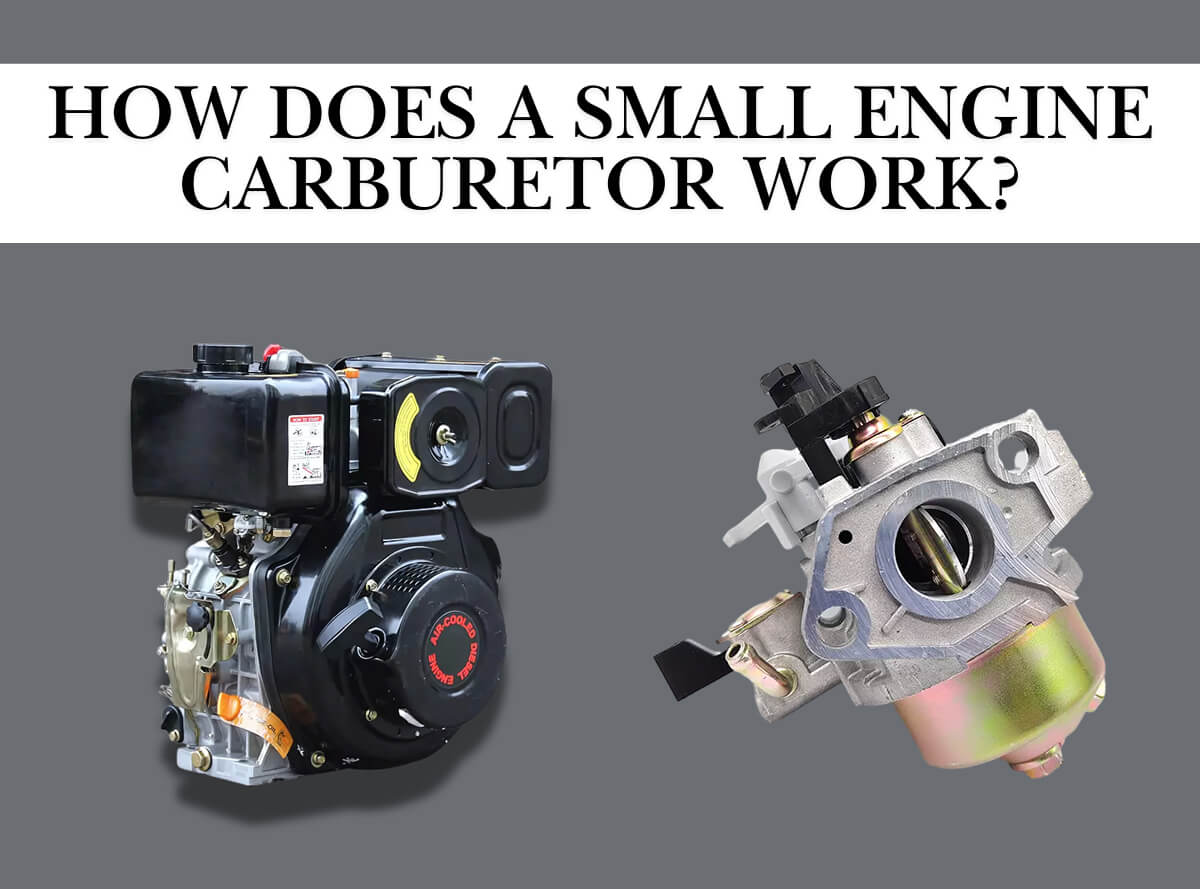
Although some modern engines use fuel injection systems, carburetors remain common in many small machines.
Their role is simple: deliver a properly balanced air-fuel mixture to the combustion chamber. When the mixture is right, the engine runs efficiently and delivers the power your machine needs.
A mixture with too much fuel (“rich”) can lead to smoke, wasted fuel, or stalling. Too much air (“lean”) may cause overheating, backfiring, or difficulty starting.
The carburetor’s main job is to keep this balance—whether the engine is idling, accelerating, or running at full speed.
To do this, it constantly adjusts for changes in load, speed, and environment, maintaining the ideal air-fuel ratio, also known as the stoichiometric ratio.
Basic principles of operation
A small engine carburetor may seem complex, but it operates on simple physics—mainly Bernoulli’s Principle and the Venturi Effect. Even without any electronics, the carburetor can adjust the fuel flow based on how much air the engine needs.
Airflow and the venturi effect
As air enters the carburetor, it flows through a narrow section called the venturi. Because of this narrowing, the air speeds up and its pressure drops. This drop in pressure creates suction that pulls fuel from the float bowl—a small fuel reservoir—through a tiny opening called a jet.
Throttle position changes airflow and suction, which adjusts how much fuel is pulled in.
The fuel doesn’t just drip in—it gets atomized into a fine mist. This mist mixes with the fast-moving air, creating a smooth air-fuel blend that enters the combustion chamber. This fine mixture burns more cleanly and efficiently, giving the engine steady power.
Air-fuel balance
One of the carburetor’s main jobs is to keep the air-fuel mix just right. For gasoline engines, the ideal mix—called the stoichiometric ratio—is about 14.7 parts air to 1 part fuel by weight. If this balance shifts too far in either direction, engine performance drops.
Adapting to different conditions
Carburetors are smartly designed to adjust to the engine’s needs at different speeds and conditions using built-in parts:
- The throttle valve controls how much air enters the engine, adjusting speed and power.
- Choke valve limits air to create a richer mix for easier cold starts.
- Venturi size and shape affect suction strength and fuel draw.
- Fuel circuits adjust the mix for different engine states—idling, accelerating, or full throttle.
All these parts work together to help the engine start easily, run smoothly, and respond quickly—without needing constant adjustments.
Key components of a small engine carburetor
A small engine carburetor may look simple, but it contains several precisely engineered parts that work together to keep the engine running smoothly, starting easily, and using fuel efficiently. Let’s look at the main components and their functions:
- Venturi: It is the narrow part inside the carburetor where air speeds up and pressure drops. This pressure drop draws fuel into the airflow from the fuel jet. Its cone-like shape maximizes airflow and enables the carburetor to pull in fuel using the natural motion of air.
- Fuel jet: These are small nozzles that control how much fuel enters the venturi. Most small engines have a main jet for high speed and a pilot jet for low speed. The jet size affects performance, and clogs here are a common issue affecting fuel delivery.
- Float chamber and float: This chamber stores fuel inside the carburetor. The float rises and falls with the fuel level, opening or closing a valve to maintain a steady fuel supply. This ensures smooth, uninterrupted engine operation.
- Throttle valve (Butterfly valve): This rotating valve controls how much air-fuel mixture flows into the engine. Connected to the throttle control, it opens wider for more power or closes to reduce speed.
- Choke: It helps start a cold engine by restricting air, enriching the mixture with more fuel. This richer mixture ignites more easily. Once the engine warms up, the choke is disengaged to resume normal airflow.
- Needle valve: The needle valve regulates fuel flow in response to changes in pressure and engine speed. It works with the float and jets to ensure the correct fuel amount enters the venturi.
The process of carburetion in action
Understanding how a small engine carburetor works isn’t just about knowing its parts — it’s about seeing those parts in motion, working together to create power. The carburetion process automatically adjusts to the engine’s needs, whether you’re slowing down at low speeds or cutting through thick grass at full throttle.
It works differently when the engine is idling, speeding up, or running at full power. Let’s walk through the process, covering the different engine states and how the carburetor adapts to each stage.
Cold start
- When the engine is cold, gasoline doesn’t vaporize easily, making it harder to ignite.
- The choke valve closes, partially or fully blocking the air intake.
- With less air, the venturi vacuum draws more fuel from the float bowl, creating a richer mixture.
- This richer mixture ignites more easily in a cold engine, helping it starts with less hesitation.
- Once the engine warms up, the choke is opened (manually or automatically) to restore the proper air-fuel balance.
Idle operation
- When the engine is idling, it runs at low speed and requires only a small amount of fuel.
- The idle circuit becomes active, delivering fuel through a dedicated idle jet.
- A small bypass hole near the closed throttle plate allows limited air to mix with the fuel.
- An idle mixture screw helps fine-tune the fuel ratio for smooth and efficient operation.
- The engine should run quietly and steadily without stalling, using minimal power.
Acceleration
- When you increase the throttle, the throttle valve opens wider, allowing more air to flow through the venturi.
- The increased airflow lowers pressure in the venturi, drawing more fuel through the main jet.
- This enriched air-fuel mixture enters the cylinder, boosting engine speed and power.
- Some carburetors include an accelerator pump that injects a quick burst of fuel to prevent hesitation during rapid throttle changes.
- The system transitions smoothly from the idle to the main circuit for responsive acceleration.
Full throttle (high-speed operation)
- Under heavy load or at max output, the throttle plate is fully open, allowing maximum airflow.
- The main jet and high-speed circuit deliver a steady, high-volume fuel supply.
- Strong suction in the venturi pulls fuel continuously from the float bowl.
- Proper atomization ensures consistent combustion, preventing misfires.
- High-performance carburetors may include adjustable screws to fine-tune high-speed fuel delivery.
- The goal is to maintain power while avoiding overheating or fuel waste.
Idle and shut off
- When the throttle is released, the throttle plate closes, limiting airflow and reducing fuel flow to idle levels.
- The engine slows and either stabilizes at idle or shuts off.
- Some engines use an idle cutoff solenoid to stop fuel flow immediately when the ignition is turned off.
- This prevents “dieseling,” where leftover fuel ignites from hot engine parts after shutdown.
Fuel delivery throughout
- The carburetor continuously delivers the correct air-fuel mixture across all operating stages.
- The float and needle valve maintain a consistent fuel level in the float bowl.
- The venturi creates suction based on airflow speed, while jets regulate how much fuel enters the air stream.
- This mechanical system relies on air pressure changes and internal passages—simple yet effective for small, durable engines.
Conclusion
The small engine carburetor has remained essential for decades thanks to its ability to mix air and fuel accurately, adapt to different conditions, and ensure reliable engine performance.
Maintaining your carburetor is key to getting the most from your engine. A clean, well-functioning carburetor helps your engine start easily, run smoothly, and use fuel efficiently. While fuel injection is gaining ground, carburetors remain popular for their simplicity, durability, and ease of repair.
As a small engine manufacturer in China, MATCHUP provide high-quality carburetors and engine parts built for performance and reliability. Trust our products to keep your equipment running strong with expert support you can count on.





May Ge
Outdoor Machinery Export Manager 6-Yr Exp 🌍 ∣ BSCI, EPA, EURO V, CE ∣ Generator, High-pressure Washer, Water Pump, Engine, Floor Scrubber ∣ 🚀 24/7 Second Reply
TAIZHOU BISON MACHINERY CO.,LTD | Ningbo University of Technology
Our related blog

what is kickback in an engine
Learn what engine kickback is, why it happens, and how it can affect your engine’s performance and safety.

how do you make a small engine last longer
Make a small engine last longer by following essential tips for small engine care, maintenance, and efficient operation.

how do you adjust a small engine carburetor?
Home Table of Contents Small engines are the hardworking heart behind many of the tools and machines we rely on every day — from rototillers

how to repair small engines
Learn how to repair small engines with this step-by-step guide, which covers common problems, fixes, and preventative maintenance tips.