

how to safely ground your generator
When using a generator — whether portable or standby — it’s essential to ensure the safety of your equipment, property, and most importantly, yourself. Grounding your generator helps protect against electrical shock, property damage, fire hazards, and code violations. It keeps you, your family, and your equipment protected from potential harm.
In this blog post, MATCHUP will walk you through why grounding is essential, when it’s needed, and how to ground your generator step-by-step using safe, reliable methods. You will find clear, step-by-step instructions, important safety tips, and advice on common mistakes to avoid. Whether you are a first-time generator user or want to refresh your knowledge, this guide will help you operate your generator with confidence and peace of mind.
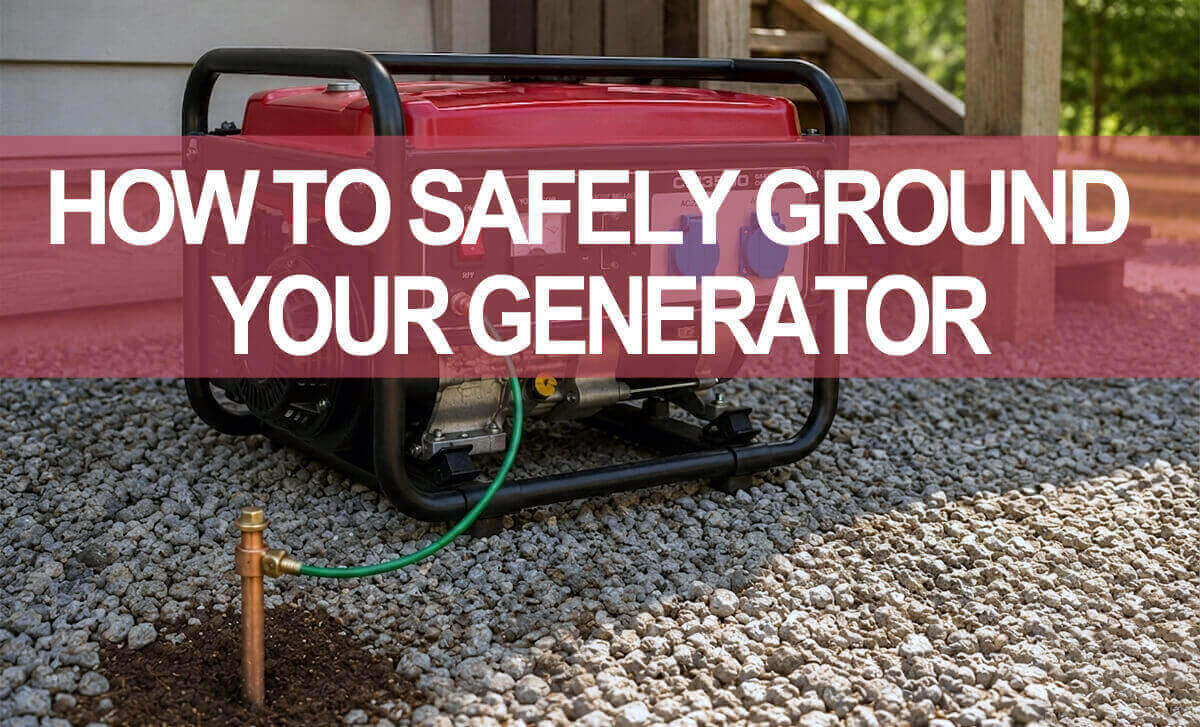
What is generator grounding?
Grounding in electrical systems refers to the practice of connecting part of an electrical circuit to the ground. Grounding a generator means creating a safe path for generator electricity in case of a fault by allowing excess or stray electricity to flow into the earth, this connection shields equipment and people from fire, electrical shock, and property damage.
There are two main types of grounding:
- System grounding: Connects a point in the power system (usually the neutral point) to earth.
- Equipment grounding: Connects non-current-carrying metal parts (such as the generator frame or equipment casing) to earth.
Grounding is a critical element in both electrical design and safety compliance and helps stabilize voltage levels.
Why is it important to ground a generator?
Properly grounding your generator is crucial for ensuring electrical safety, optimal equipment performance, and regulatory compliance, yet it is often overlooked.
- Prevents electric shock: When a generator is grounded, any fault current is safely diverted to earth. This lessens the possibility of receiving an electric shock when coming into contact with energized metal surfaces during a malfunction.
- Protects connected equipment: Ungrounded generators can produce unstable or stray voltages, which can damage sensitive electronics, power tools, or equipment connected to the system.
- Ensures fire safety: Electrical faults can cause heat buildup, arcing, or sparks. Grounding reduces the likelihood of these conditions, reducing the risk of fire in both residential and industrial setups.
- Complies with electrical codes: The National and many local authorities require proper generator grounding, particularly when used in conjunction with transfer switches or distribution panels. Failure to ground your generator could result in legal penalties or void insurance coverage.
- Stabilizes system voltage: Grounding provides a reference point for voltage levels, helping to maintain system stability and improve the overall reliability of electrical generation.
Do all generators require grounding?
Not every generator setup requires separate grounding, and it is essential to understand when it is necessary to ensure safety and compliance. Whether or not your generator needs to be grounded depends on how it is used and the configuration of its electrical system.
Some generators have a bonded neutral, meaning the neutral wire is connected (or “bonded”) to the generator’s metal frame. If you are plugging appliances directly into the generator’s outlets and not connecting it to the building’s wiring, additional grounding is usually not required.
However, you will need a ground rod if your portable generator is:
- Connected to the home via a transfer switch.
- Powering a structure such as a food truck or construction trailer.
- Has a separate neutral and ground (floating neutral).
- Being used with extension cords, connected to a transfer switch, or integrated with a building’s electrical system.
In these cases, a grounding electrode system (such as a ground rod) is often required.
Standby (permanent) generators: These generators are hardwired into a building’s electrical system and typically use a transfer switch. In these cases, requires ground fault protection.
How to check your generator’s grounding type
The easiest and safest way to determine your generator’s grounding type is to consult the owner’s manual. If that’s not available, you can use a multimeter to test continuity: place one probe on the neutral pin of the generator’s outlet and the other on the generator’s metal frame. If the multimeter shows continuity, the generator has a bonded neutral; if not, it is floating neutral and requires proper grounding.
Tools and materials needed to safely ground a portable generator
Before grounding your generator, ensure you have the necessary tools and materials.
- Grounding rod (grounding electrode / ground rod): Usually composed of copper or galvanized steel, the grounding rod is the metal rod driven into the earth to safely carry fault currents away from the generator. It is typically 1/2 to 5/8 inch in diameter and about 8 feet long.
- Grounding wire (grounding conductor / wire): This is the wire that connects the generator frame to the ground rod. Use insulated copper wire, with #10 AWG being common, though the size may vary depending on your generator and local electrical codes.
- Ground clamp: A UL-approved ground clamp (such as an acorn or hub clamp) is required to securely attach the grounding wire to the ground rod. This ensures good electrical contact and prevents loosening over time.
- Hammer or sledgehammer: You will need a heavy-duty hammer or sledgehammer to drive the ground rod into the soil. For hard or dry soil, this may require considerable effort.
- Socket set or wrench: To secure the ground wire to the generator’s grounding terminal or lug, a wrench or socket set is required.
- Wire strippers: Use wire strippers to remove the insulation from the ends of the wire before attaching it to the generator and clamp.
- Multimeter (optional): A multimeter can help test continuity and verify that the generator is properly grounded. This is useful for extra reassurance, especially in critical or high-power setups.
- Safety equipment: Use gloves to protect your hands from sharp edges or metal surfaces and safety glasses to shield your eyes while driving the rod.
Having all these tools and materials ready before starting will make the grounding process smoother, safer, and more effective.
How to ground your portable generator: a step-by-step guide
Grounding your generator is a straightforward process if you follow the proper steps and take the necessary safety precautions.
Caution: always turn off the generator and disconnect any loads before beginning grounding work.
- Secure the generator (choose the right location): Place the generator outdoors on a flat, dry surface away from doors, windows, and vents. Ensure it’s at least 15–20 feet away from buildings to prevent carbon monoxide buildup, reduce fire risks, and allow safe airflow. Avoid areas prone to flooding or standing water, and keep it away from buildings, fences, and other obstacles.
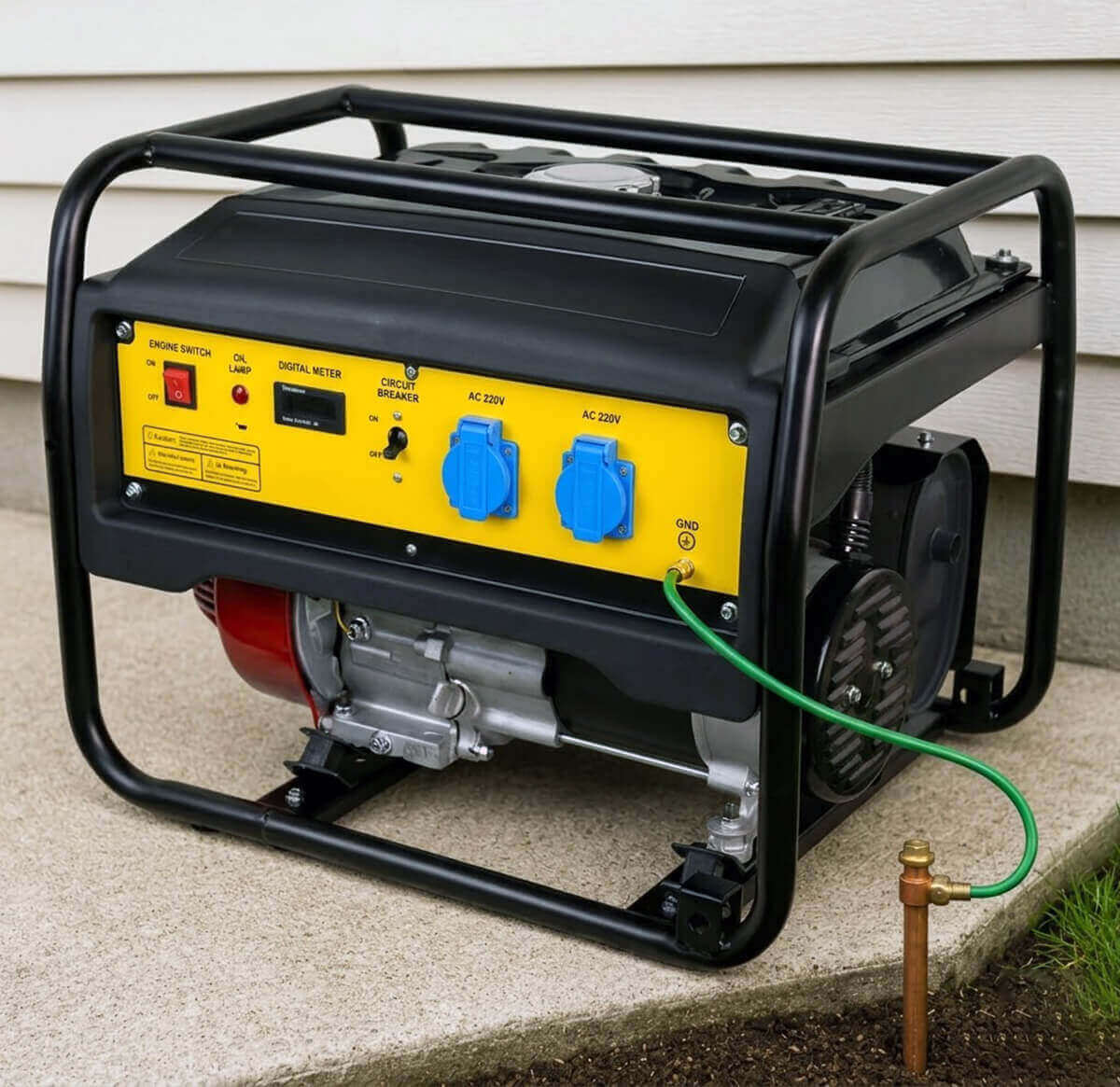
- Drive the ground rod into the ground: Using a hammer or sledgehammer, drive the ground rod into the ground at least 4 feet deep. For maximum safety and code compliance, aim for a height of 6 to 8 feet. The rod should be placed close to the generator but not directly under it.
Tip: if the soil is hard or dry, pour water around the rod to soften it before hammering it in. - Prepare the grounding wire: Measure and cut a length of copper grounding wire that will connect your generator to the ground rod with some slack. Use a wire stripper to remove about 1–2 inches of insulation from the ends of the wire.
- Attach the wire to the generator frame (connect the wire to the generator): Locate the grounding terminal or lug on your generator (usually marked with a “Gnd” or ground symbol). Use a wrench or socket to loosen the terminal, insert one end of the wire, and tighten it securely. Ensure there is solid metal-to-metal contact with the generator frame and do not attach the wire to random bolts or parts.
- Attach the wire to the ground rod (connect the grounding wire to the rod): Wrap the other end of the wire around the top of the ground rod and secure it using a ground clamp (acorn or hub clamp). Ensure the connection is tight, stable, and free of corrosion or gaps.
- Inspect and test the ground (secure connections and test): Double-check all connections for tightness and stability. If the generator will be outdoors, consider using weatherproof covers to protect the connections from rain or moisture. Finally, test the resistance between the ground rod and the generator frame using a multimeter. A reading of 25 ohms or less is considered safe and effective. So the generator frame is properly grounded before use.
By following these guidelines, you can reduce dangers, ensure that your generator is grounded safely and correctly, and meet most electrical regulations.
Grounding for the generator transfer switch setup
When connecting a generator to your home using a transfer switch, grounding becomes even more critical. This setup involves integrating the generator into your home’s electrical system, introducing new safety and code compliance considerations.
Understanding transfer switch types
Transfer switches come in two primary varieties:
- Manual transfer switch: You must manually switch the generator’s power supply from the utility.
- Automatic transfer switch (ATS): Automatically switches power to the generator during an outage.
Both types must be properly grounded, and how you do this depends on the neutral grounding configuration of your generator.
Floating neutral vs. bonded neutral generators
- Bonded neutral generator: The neutral conductor is electrically connected to the generator frame. In this case, when using a transfer switch, you must install a separate ground rod and disconnect the neutral-to-ground bond at the transfer switch to avoid creating two ground points.
- Floating neutral generator: The neutral is isolated from the frame. If your home’s main panel is grounded, the generator uses the home’s existing grounding system via a transfer switch. No separate ground rod is required unless required by local code.
Important: You should never have two neutral-to-ground bonds in the same system. Doing so can cause circulating currents, shock hazards, and electrical code violations.
Grounding steps for transfer switch setup
- Check the generator manual: Verify whether your generator has a bonded or floating neutral.
- Verify the transfer switch rating to ensure it matches your generator’s grounding scheme.
- Install a ground rod (if needed): For a bonded neutral setup, run a ground rod and attach it to the generator frame with a grounding wire and clamp.
- Inspect the main panel bond: Make sure your main service panel has only one neutral-to-ground bond.
- Speak with an electrician: It is strongly advised that a professional electrician confirm correct grounding and adherence to local codes.
Proper grounding in a transfer switch setup is essential for safety and to protect your home’s wiring and electronics from faults, overloads, or surges.
Common generator grounding mistakes to avoid
Even minor errors can lead to significant safety risks, equipment damage, or code violations when grounding your generator. Understanding and avoiding these typical generator grounding errors is crucial to ensuring a secure and dependable setup.
- Using a ground rod that is too short: Many users only drive the rod 1–2 feet into the soil, but it requires at least 4 feet, ideally 6–8 feet, for proper contact with the earth. If the ground rod isn’t fully driven into the earth, it won’t effectively carry fault currents, increasing the risk of electric shock or damage to the generator during a fault.
- Connecting to improper grounding sources: Do not use metal fences, water pipes, rebar, or other improvised objects as a substitute for grounding. These do not provide a permanent or safe electrical path and can result in shock or equipment damage.
- Using an undersized grounding wire: The grounding wire must be thick enough to carry fault current safely. If the wire is too thin, it may melt or overheat. Always use 6 to 10 AWG copper wire, depending on the generator’s size and intended use, following the generator manual or local codes.
- Making multiple neutral-to-ground bonds: Having more than one neutral-to-ground bond (for example, in both the generator and the home’s main panel) can create circulating currents and shock hazards. There should only be one bond in the system, depending on the setup.
- Neglecting to test the ground: Assuming the system is safe once the wire is connected is risky. Without testing with a multimeter or continuity check, there is no guarantee the grounding resistance is adequate. A resistance of 25 ohms or less is recommended.
- Ignoring local electrical codes: Location-specific grounding requirements may differ. Relying only on general NEC guidelines without checking local codes can lead to non-compliance or unsafe installation. Local rules may have stricter requirements for rod placement, wire type, or grounding method.
- Loose or bad connections: Moisture and vibration can loosen clamps or corrode wire ends. Loose clamps or poorly attached wires at the ground rod or generator frame can break the grounding path, compromising safety and increasing the risk of electric shock.
- Grounding when it’s not needed: Some portable generators with bonded frames do not require additional grounding if directly powering equipment. Improperly adding grounding in these cases can create a conflicting path and pose a hazard.
By avoiding these mistakes and following proper grounding procedures, you ensure your generator operates safely and protects both people and equipment.
Maintaining your generator’s grounding
Proper maintenance of your generator’s grounding system is essential to keep it safe and effective over time.
- Regular inspections: Set up a routine inspection schedule to check all grounding components. Examine the grounding wire, clamps, and connections for wear, fraying, or damage. Make sure all bolts and clamps are tight and secure, as loose connections can reduce the system’s effectiveness.
- Check for corrosion: Look for corrosion on the ground rod, clamps, and generator grounding lug. Corrosion can interfere with electrical conductivity, weakening the grounding system. Clean lightly corroded areas with a wire brush, and replace any parts that are severely damaged.
- Retest ground resistance: Periodically test the ground connection using a multimeter or proper ground testing equipment. This ensures the system can safely carry fault currents and helps detect problems early before they become safety hazards.
- Seasonal considerations: Grounding performance can be affected by soil conditions, such as dry soil in summer or frozen ground in winter. During these times, increase the frequency of inspections and ensure the ground rod maintains good contact with the soil. Adjust your maintenance routine to account for seasonal changes.
By following these steps, you can maintain a reliable grounding system that keeps your generator and connected equipment safe for years to come.
Conclusion
Proper grounding is the simplest and most essential step to ensure safe generator operation. It protects you, your family, and your equipment from electric shock, short circuits, and damage. Taking a few careful steps — choosing the right location, installing a grounding rod correctly, and checking all connections — can prevent serious accidents. Don’t wait for the next power outage: ground your generator correctly today to keep your home and devices safe.
Frequently asked questions
Can I use any metal rod for grounding?
No, only UL-listed copper or galvanized steel rods should be used. Reinforced materials such as rebar, fence posts, or water pipes are unsafe and not up to code.




May Ge
Outdoor Machinery Export Manager 6-Yr Exp 🌍 ∣ BSCI, EPA, EURO V, CE ∣ Generator, High-pressure Washer, Water Pump, Engine, Floor Scrubber ∣ 🚀 24/7 Second Reply
TAIZHOU BISON MACHINERY CO.,LTD | Ningbo University of Technology
Our related blog

generator oil change tips & tricks
Generator maintenance made easy: Step-by-step oil change tips and tricks to keep your backup power ready when you need it.

connecting a generator to your home
Learn how to safely connect a generator to your home during power outages. Discover legal methods, transfer switches, and expert tips to keep the lights on.

can you run a portable generator indoors?
Can you run a portable generator indoors? Learn about serious safety hazards and essential precautions every homeowner should know.

How long can a generator run
Curious how long a generator can run? Discover the factors that influence generator runtime, from fuel type to load capacity, in this comprehensive guide.